🏳️🌈🏺🛐 Beloved Disciple: Bible 8
🏳️🌈🏺 2-GAY IN HISTORY: Bible 8🛐🏳️🌈
Love your neighbor, forgiveness, nonviolence, mama’s boy, anointed with perfume, long hair, hanging out with all guys, letting one cuddle with him at the dinner table, no wife… does Jesus sound kinda gay, bro?
Jokes aside:
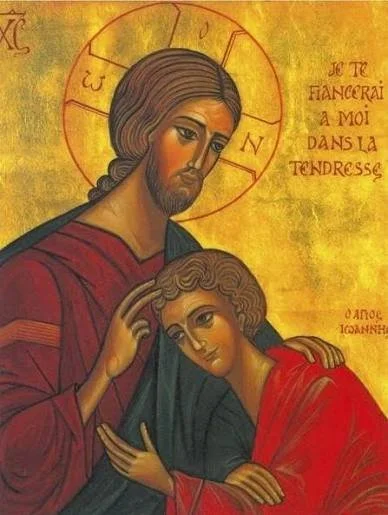
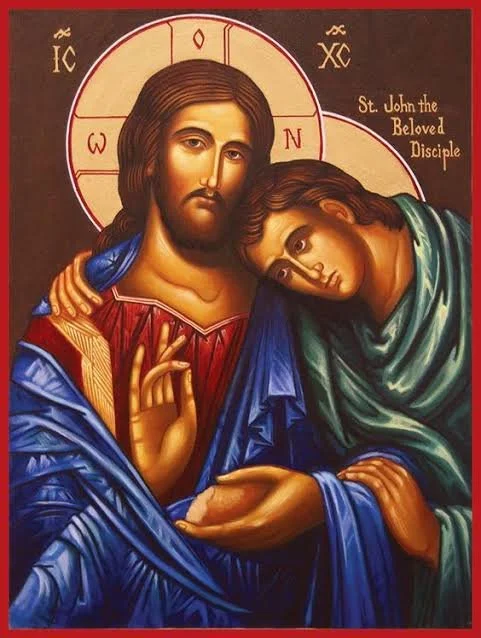
The Gospel of John contains a very special, somewhat queer character who appears the most intimate with Jesus, but is never named, and is described only by his relationship to Jesus. He is ‘ho mathetes hon egapa ho Iesous’— the disciple whom Jesus loved, not just loved Jesus.
He appears at the Last Supper reclining against Jesus(John 13:23). The Greek word is ‘kolpos’ — bosom, chest, the space between. John uses the same word in the gospel’s prologue to describe the Son’s relationship to the Father: the only begotten who is ‘eis ton kolpon’ of God. The Beloved Disciple’s physical intimacy with Jesus is uniquely framed in the same register as divine intimacy.
When Peter wants to know who will betray Jesus, he doesn’t ask Jesus himself. He asks the Beloved Disciple to ask, because the Beloved Disciple is close enough, trusted enough. He is the mediator of Peter’s concern at the most consequential moment in Christian history.
Then at the crucifixion all the male disciples have fled but not the Beloved Disciple. Jesus looks down from the cross and speaks to him and to his mother in the same breath, binding them to each other: “Woman, behold your son. Behold your mother.” Queer readings have often seen this as a very unorthodox marriage. Jesus makes him family in his final words, entrusting his mother to the person he loves. Making him family, and Mary his mother in love if not in law.
The queerness continues Easter morning when Mary Magdalene runs to tell Peter and the Beloved Disciple that the tomb is empty. They race to the tomb. The Beloved Disciple outruns Peter and arrives first — but stops at the entrance. Peter goes in. Then the Beloved Disciple enters, sees, and the text says simply: “he believed.” Not Peter, the one who loved Jesus is the first to understand the resurrection.
The tradition has worked hard to give him a name. He is usually identified as John son of Zebedee, since he is missing from John’s Gospel while named in others. Some early traditions suggested Lazarus — the only other man the gospel explicitly says Jesus loved (efilei, John 11:3 our next topic). Some modern scholars suggest the anonymity is deliberate, a 2,000 year mystery or invitation.
What the text does not obscure is the relationship itself. The Beloved Disciple is present where the other disciples are absent. He is physically intimate with Jesus in public, at table, in a way the text presents without equivocation. Jesus’s last earthly act of love, of care, is directed at him. He is the one who believes first.
The gospel does not name what this is, but this loving intimacy was seen as too important—too beautiful—to be scrubbed out by the early church… so why are we letting the modern church?