🏳️⚧️🏺Elagabalus
🏳️⚧️🏺 2-Gay in History 🏺🏳️🌈
“Call me not Lord, for I am a Lady.”
— Elagabalus, as recorded by Cassius Dio,
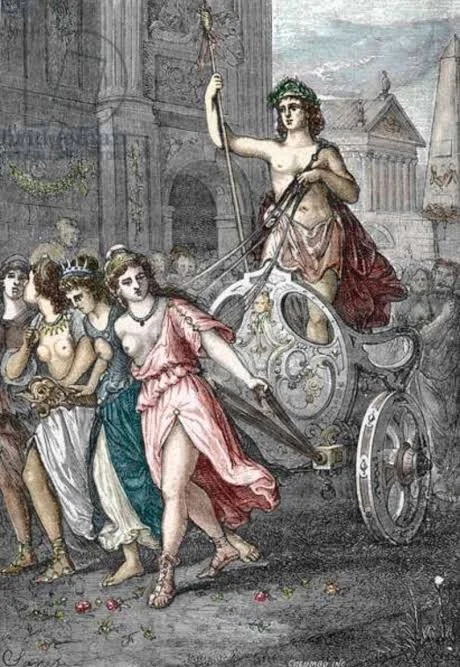
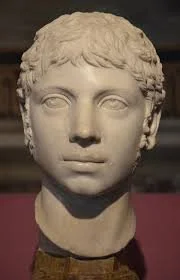
By 218 CE the Roman Empire was a bit of a mess. The murderous Emperor Caracalla had been killed, and his young cousin — or possibly illegitimate child — was elevated to the throne at just 14. Raised as a priest to the eastern sun god Elagabal, Varius Avitus Bassianus was massively unprepared and despised by the ruling class, who wrote most of our histories. So all our sources come tainted with bias. But she very well may have been a Trans Roman Emperor. (And yes, we are using she/her for this post.)
“[her] face painted more elaborately than that of any modest woman, dancing in luxurious robes and effeminately adorned with gold necklaces.”
— Herodian
She arrived in Rome presenting fully femme — elaborate makeup, hairless body, silk robes embroidered with gold, a jeweled tiara. Her court tried to frame it as “eastern religious garb,” but it was obviously more than that. One of her first acts as emperor was to appoint her mother and grandmother to the Senate — the first two women ever to hold senatorial titles. She brought the festivals of Elagabal to Rome with free food and spectacle for the masses, challenging Roman tradition and earning her the name we know her by: Elagabalus.
Beyond her presentation, there’s real evidence of gender dysphoria. She had been circumcised (unusual for Rome), reportedly wished to be fully castrated, and according to Cassius Dio, offered enormous sums to any physician who could surgically create a vagina (Roman History). She also would reportedly ask:
“ philosophers and even men of the greatest dignity whether they, in their youth, had ever experienced what [she] was experiencing.”
— Historia Augusta, Life of Elagabalus
The Historia Augusta and Cassius Dio describe her openly sleeping with men, frequenting the brothels as a receptive partner, and rating lovers by endowment, even dispatching agents to the baths to seek out the most well-hung. She married four women (including a Vestal Virgin) and at least two men — most notably Hierocles, a charioteer who had been enslaved.
Now — a lot of these accounts veer into sensationalist fantasy. Later elites, including early Christian writers, loved to pile on, including accusations of child sacrifice to eastern gods (probably in an ancient pizza parlor basement). It’s important to remember that Rome’s supreme virtue was Virtus — literally the root of our word “virtue,” and essentially means patriarchal machismo.
While same-sex acts were permitted in pre-Christian Rome, it was only socially acceptable to be a top. Being receptive was an insult (one hurled at Julius Caesar too, he killed the guy who said it). Layer on top of that an aristocratic hostility toward eastern religion and you have a perfect recipe for historical character assassination.
Worth noting: Cassius Dio wrote under the patronage of her successor Severus Alexander — a cousin Elagabalus had tried to have killed. Not exactly a neutral source.
Her attempt to assassinate Alexander backfired. The soldiers mutinied instead, murdering her at just 18 and dumping her body in the Tiber. Alexander went on to be a famously weak emperor himself.
But across these hostile accounts, something real and recognizable still shows through. She insisted on her pronouns, presented as her gender, sought surgical transition, and experienced dysphoria.
We have always been here — in the brothels of ancient Rome, on the throne of an empire, asking the philosophers if they understood.
March 31st has been Trans Visibility Day since 2009. Two years ago it fell on Easter Sunday and became a flashpoint for right-wing outrage. But we will not be cowed into silence. Silence = Death. Speak up for our whole community, today and everyday🏳️⚧️