🏳️🌈🏺2-Gay in History ⚖️🏳️🌈
Bowers v. Hardwick (1986) & Lawrence v. Texas (17 shameful years later)
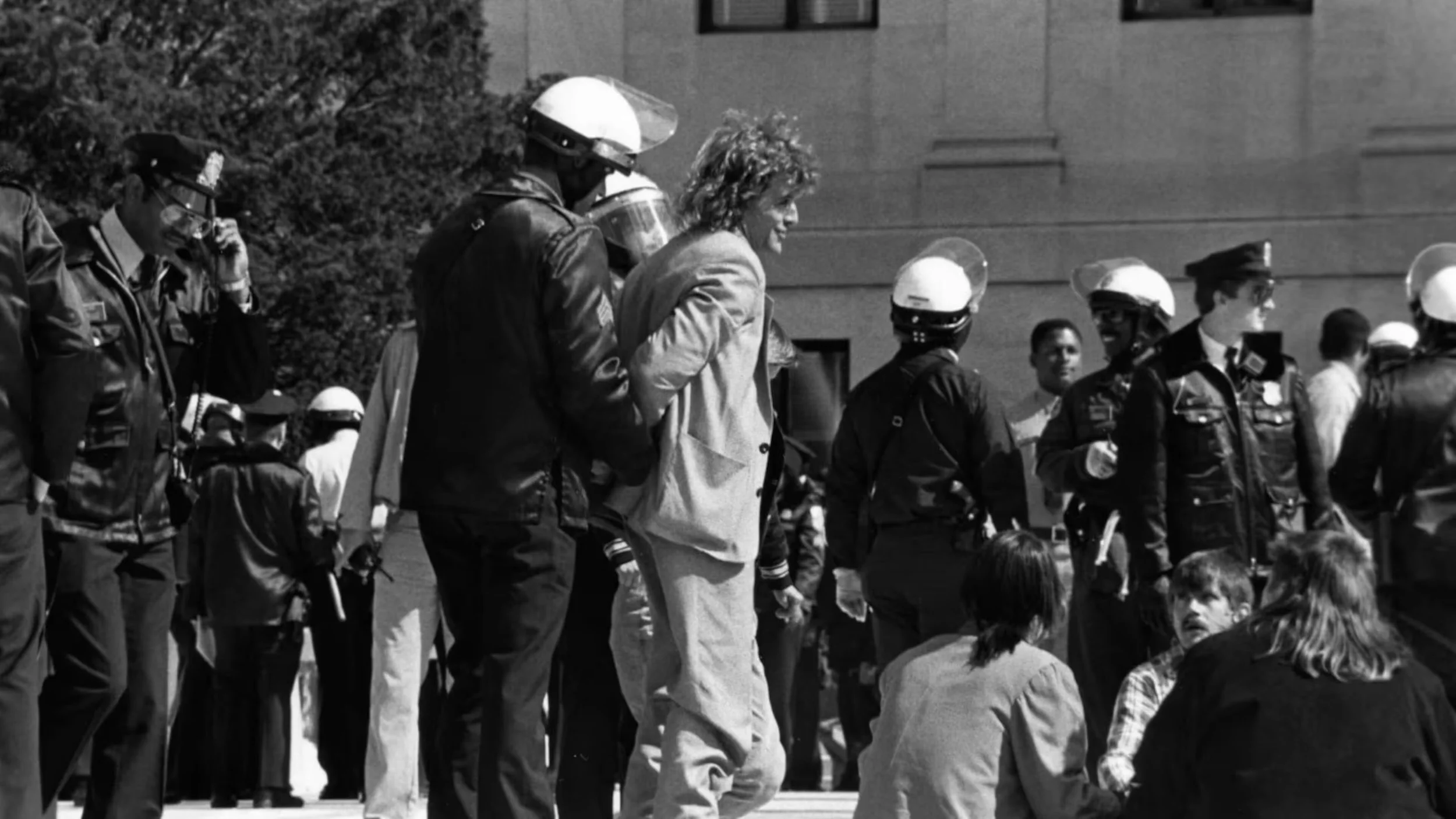
In the early morning hours of an August day in Atlanta, a police officer arrived at Michael Hardwick’s home to serve a warrant — a minor matter, a public drinking ticket that had resulted in a missed court date. A roommate let him in, and he walked to a bedroom door, opened it, and found Hardwick in bed with another man. He arrested both of them on the spot under Georgia’s sodomy statute, a law that carried a penalty of up to twenty years in prison.
The district attorney eventually declined to prosecute. But Michael Hardwick didn’t let it go. Represented by the ACLU, he brought a constitutional challenge — and after four years, his case reached the United States Supreme Court.
By then, much of the Western world had already moved on. France and the Netherlands had effectively decriminalized same-sex conduct 175 years earlier. Denmark followed in 1933. Sweden in 1944. The United Kingdom was late, decriminalizing in 1967, following the Wolfenden Report. West Germany and Canada both moved in 1969. Even Illinois had quietly decriminalized in 1961. The United States as a whole was way behind the time. By 1986, half the states still had sodomy laws on the books — many carrying serious criminal penalties.
The Supreme Court ruled 5-4 against Hardwick. Justice Byron White wrote for the majority, framing the question in the narrowest possible terms: did the Constitution confer a fundamental right to engage in homosexual sodomy? The majority said no.
But it was Chief Justice Warren Burger’s concurrence that revealed the full weight of contempt behind the ruling. Burger wrote separately to make sure no one missed the homophobia. A constitutional right to homosexual sodomy, he wrote, would “cast aside millennia of moral teaching.” He grounded the ruling explicitly in “Judaeo-Christian moral and ethical standards.”— he reached back to 18th century English jurist William Blackstone’s description of homosexual sex as “the infamous crime against nature,” calling it worse than rape, and “a crime not fit to be named.” Burger cited that approvingly in the 80s.
Justice Lewis Powell (of Powell memo infamy) was the fifth vote, he had waffled on the case but ultimately ruled against Hardwick. Then four years later Powell said publicly that his vote in Bowers had probably been a “mistake.” Probably.
Justice Harry Blackmun’s dissent invoked Louis Brandeis, he wrote that the case was really about “the most comprehensive of rights and the right most valued by civilized men” — “the right to be let alone.” The majority had refused to recognize not just a right to homosexual intimacy, but the fundamental interest all people have in controlling the nature of their intimate lives.
It was a crushing blow to the gay rights movement, seventeen years after stonewall and in the midst of the AIDS crisis; for another seventeen years, Bowers v. Hardwick was the law of the land.
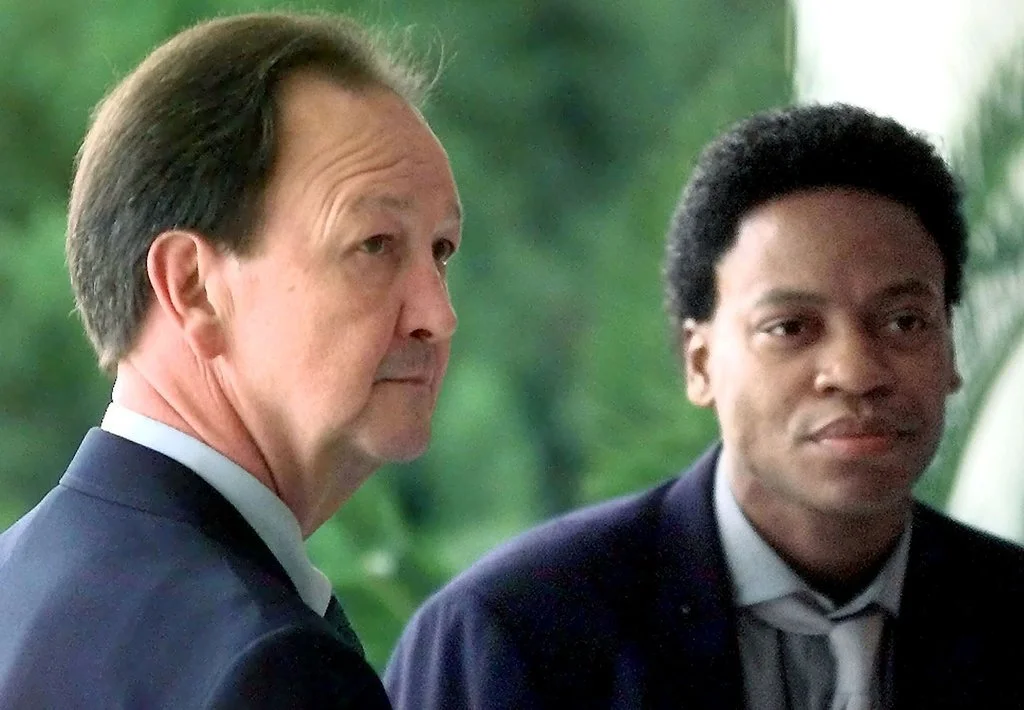
In the late 90s, police in Texas responded to a call about a weapons disturbance, they entered the apartment of John Lawrence and found him and Tyron Garner together. They were arrested under Texas’s Homosexual Conduct law and held overnight. No weapons, no disturbance, it was a false report by a rejected lover. They just found two men in a bedroom.
It was, almost, the exact same story.
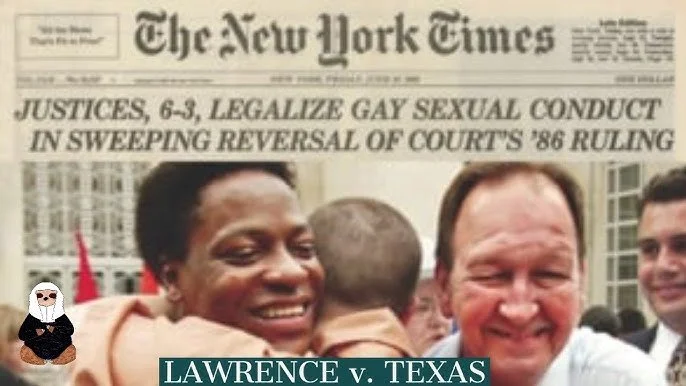
Lawrence and Garner were convicted and fined. They appealed. Their case moved through the courts for four years, and in 2003, it reached the Supreme Court. In the fourth week of June, 2003 the Court finally ruled 6-3 in their favor. Justice Anthony Kennedy wrote the majority opinion: Bowers, he wrote, “was not correct when it was decided, and it is not correct today.” And continued writing:
“Liberty presumes an autonomy of self that includes freedom of thought, belief, expression, and certain intimate conduct. The petitioners are entitled to respect for their private lives. The State cannot demean their existence or control their destiny by making their private sexual conduct a crime.”
Justice Scalia dissented in a characteristic tantrum, declaring that the majority had “signed on to the so-called homosexual agenda,” warning the decision called into question laws against same-sex marriage, bigamy, and obscenity. He was trying to sound an alarm. He was, accidentally, prophetic.
Lawrence v. Texas did not end the legal battles, it was just the start, as this series will show. But it did say: your private life is private, and the state can’t litigate who you love.
It took seventeen years, twice, but the Court finally got there, on the second try.