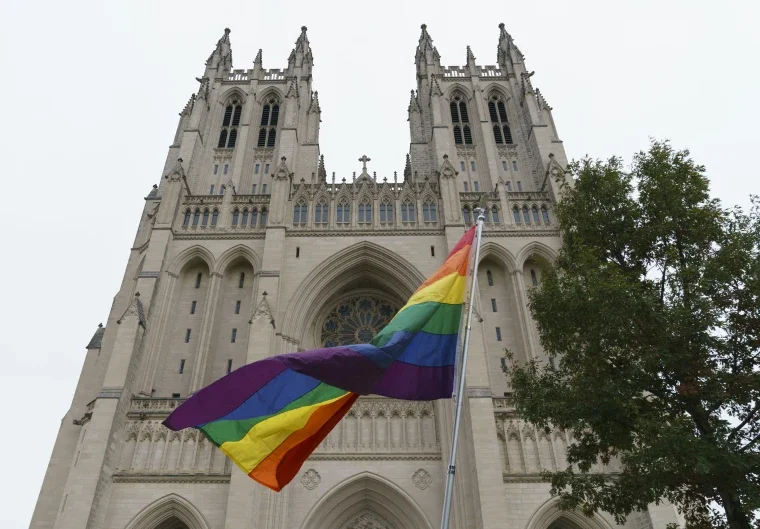
🏳️🌈🏺🛐Bible 15: Closing thoughts
🏳️🌈🏺 2-Gay in History: Bible 15🛐🏳️🌈
This is the closing post of our Bible series —
The Bible is more than you’ve been told, and certainly more than you’ve ever been quoted from a pulpit. Just read the Song of Solomon — the most erotic book in scripture — and watch how the church tied itself in knots trying to spiritualize and suppress it, because inconvenient texts have always made institutions nervous. That instinct to control the text is the same one this series has been tracing all along.
This kind of queer exploration was something John Boswell famously began decades ago in Christianity, Social Tolerance, and Homosexuality, and the scholars who followed him have built a substantial body of work. We’ve drawn on a lot of it here. But we want to be honest: not every argument in this series carries equal weight. The authorship of the Secret Gospel of Mark is genuinely contested. David and Jonathan being more than brothers is suggested by the language but never named by the text. Some readings are mere possibilities. Others — the pais/doulos distinction, the rhetorical trap of Romans 1, the manuscript evidence behind the silencing of women, the interpretation of Sodom as violence to strangers— are confirmed by the text itself, and the scholarship is solid.
Then there is all the hypocrisy of ignored passages on polygamy, divorce, dietary restrictions, and slavery, while homosexuality alone is held up.
We’re not asking you to take any of this as gospel. We’re asking you to sit with the reasonable doubt. Because the burden of proof was never ours. It belonged to the institution that wanted to exclude us from the love of God that Jesus preached — and reading the whole text, it turns out they didn’t have nearly as strong a case as they pretended.
What we can say with confidence is this: queer people are in the Bible: not as cautionary tales, and not just in the margins. In the covenant with Naomi. In the grief of David. In the faith of the centurion. In the intimacy of the Beloved Disciple. In the promise Isaiah made to the eunuchs, fulfilled in Acts on a desert road. In the very words Jesus chose when he described people who fall outside the binary and said simply: let anyone accept this who can.
The institution spent centuries deciding that what the text said could not mean what it said — because the people it honored could not be holy. Feminist scholars started dismantling that project fifty years ago. Queer scholars have begun doing the same work ever since. Both projects are the same: reading the whole verses, refusing the interpretations and lies layered over them, and insisting the Bible is large enough to hold the people it always contained.
That work is now showing up in pews and pulpits. The United Church of Christ has ordained LGBTQ pastors since the 70s. In 2003 the Episcopal Church, ordained an out partnered bishop; and along with the Lutherans (ELCA) and the Presbyterian Church USA, all mainline denominations are now fully affirming, even allowing same-sex marriages to be performed. Just in May 2024, the United Methodist Church — the second largest Protestant denomination in America — voted with 93% approval to lift its ban on LGBTQ ordination and called sexuality “a sacred gift.”
Christianity is not a monolith. There are communities where you are not just tolerated but celebrated. Where your love is not a problem to be managed but a gift to be blessed. Where a place at the table is waiting for you.
And if institutional faith isn’t for you — for one reason or another — know this: you were always in the story. Before the translations. Before the councils. Before the sermons and the rulebooks and the schisms. The Bible reflects and has space for the full flawed human spectrum.
You were always there. The text records it.
🏳️🌈⛪ If you’re looking for a faith community that celebrates you —
If you were raised Catholic → try The Episcopal Church. Same liturgy, same sacraments, same smells and bells. All the saints and sciences are welcome, even doubters and agnostics. It’s the best— radically inclusive—but I’m 💯 biased.
If you were raised Methodist → the United Methodist Church is now fully affirming as of 2025. Your church may already be home.
If you were raised Southern Baptist → try American Baptist Churches USA. Same tradition, same Bible, look for Welcoming and Affirming congregations.
If you were raised Presbyterian (PCA) → try Presbyterian Church USA. Same tradition, look for More Light congregations.
If you were raised Lutheran (LCMS or WELS) → try the ELCA. Same liturgy, same theology, look for Reconciling in Christ congregations.
If you were raised in the Church of Christ → try Disciples of Christ. Same Restoration Movement roots, fully affirming since 2013.
If you were raised non-denominational or evangelical → try United Church of Christ. Scripture-focused, low church, and the first mainline denomination to ordain an openly gay minister — back in 1972.
If you were raised Pentecostal → try Metropolitan Community Church. Founded in 1968 by a Pentecostal preacher named Troy Perry who was told God couldn’t love him. He disagreed. The worship will feel familiar.
Some queer Christians stayed in the pews of churches that didn’t want them and fought for decades to change them from the inside. All then denominations that are now inclusive are because of them.
DignityUSA has been organizing LGBTQ Catholics since 1969 — fighting for reform in a church that still won’t budge, because they believe their faith is worth the fight, they have made inroads and even met with Pope Francis along with New Wave Ministries
Integrity USA was founded in 1974 in rural Georgia by Dr. Louie Crew — an openly gay Episcopalian who helped build the grassroots movement that eventually led to Gene Robinson’s consecration in 2003 and full marriage equality in the Episcopal Church.
Reconciling Ministries Network spent over forty years mobilizing United Methodists for full inclusion, now to see the ban fall in 2024 with 93% approval.
More Light Presbyterians did the same slow patient work inside the Presbyterian Church USA and succeeded as well
These people had remarkable strength. They stayed and argued and prayed and were tried in church courts, refused communion, and yet kept showing up. The denominations that are now affirming didn’t get there by accident — they got there because of the slow work of people refused to be pushed out of the faith they loved.
Both paths are blessed if they lead to love and wholeness. Find the community — whether that means leaving, staying and fighting, or building something new like Troy Perry did in his living room in 1968.