🏳️🌈🏺2-Gay in History🏺🏳️🌈
— Lesbian Visibility Week —
“If she flees, soon she shall pursue; if she refuses gifts, she shall give them; if she does not love, soon she shall love, even unwilling.” — Sappho, begging the goddess of love to help her win a girl. Hymn to Aphrodite.
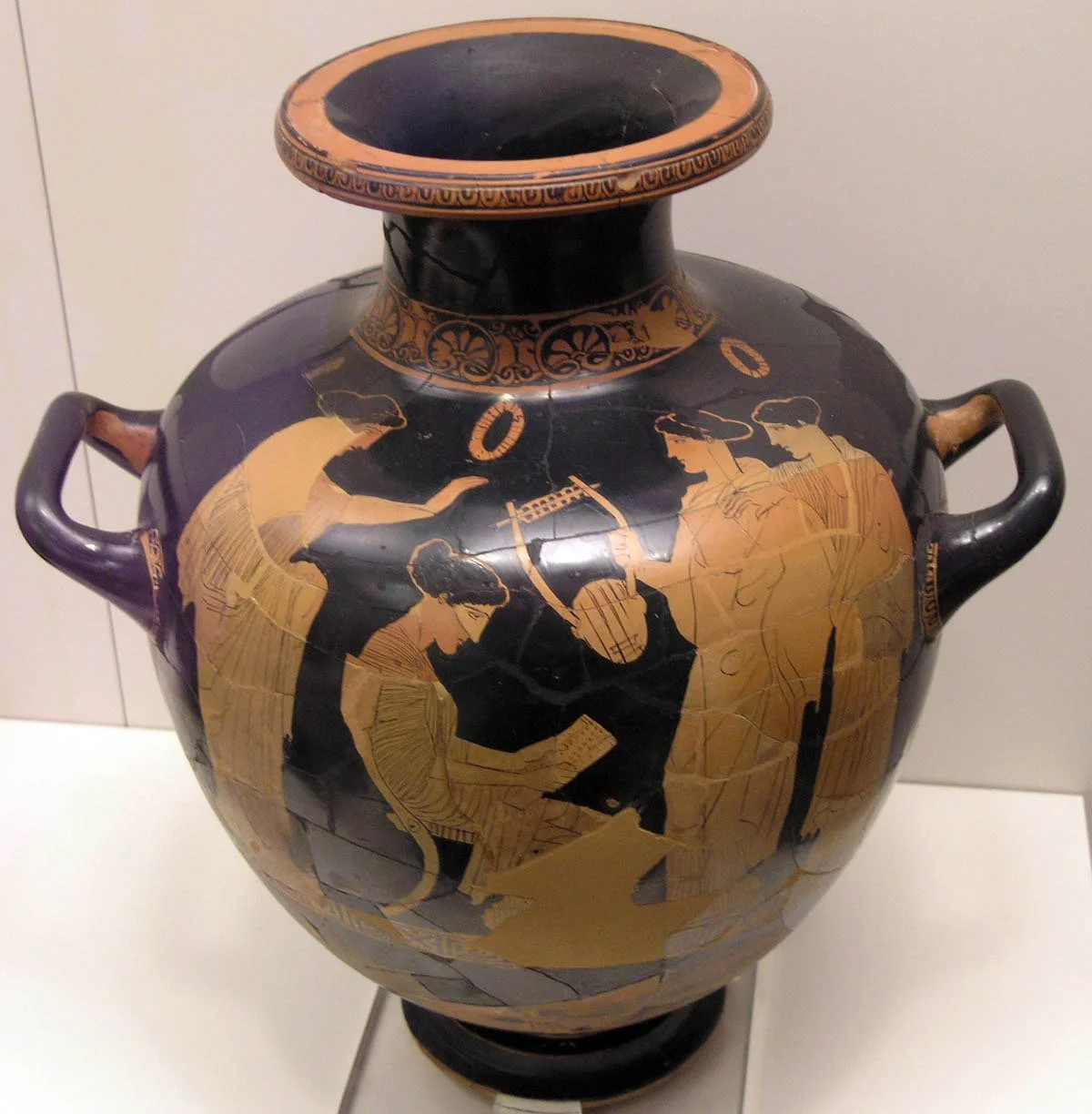
Some time around 630 BCE — a couple of centuries after Homer and a couple more before the Classical age — a woman was born on an island in near Ionia called Lesbos who would go on to be iconic.
More apropos for this week, she is the very origin of the word “lesbian.” Unfortunately, we know barely anything about her.
Her lyric poetry, which we might compare to an indie song today, was adored across the ancient world. Plato named her the 10th Muse, and Solon of Athens — one of the first democratic reformers — reportedly heard one of her songs and asked to learn it before he died. But as language barriers distanced her work over time, not many copies of her perhaps 10,000 lines survived. We know she was born to a good family on the isle of Lesbos, near the Aegean coast of what is now Turkey. We know political exile drove her to Sicily.
We know she had at least two brothers she wrote about, one a cupbearer (often a gay euphemism). She wrote about a ‘Pais’ — a word used elsewhere in ancient Greek to describe the younger partner in a same-sex relationship — who may have been her child, or may have been a beloved, male or female. And yes, she was bisexual. The first lesbian was bi. Don’t read too much into that, though, sexuality and labels were far more fluid in the ancient world.
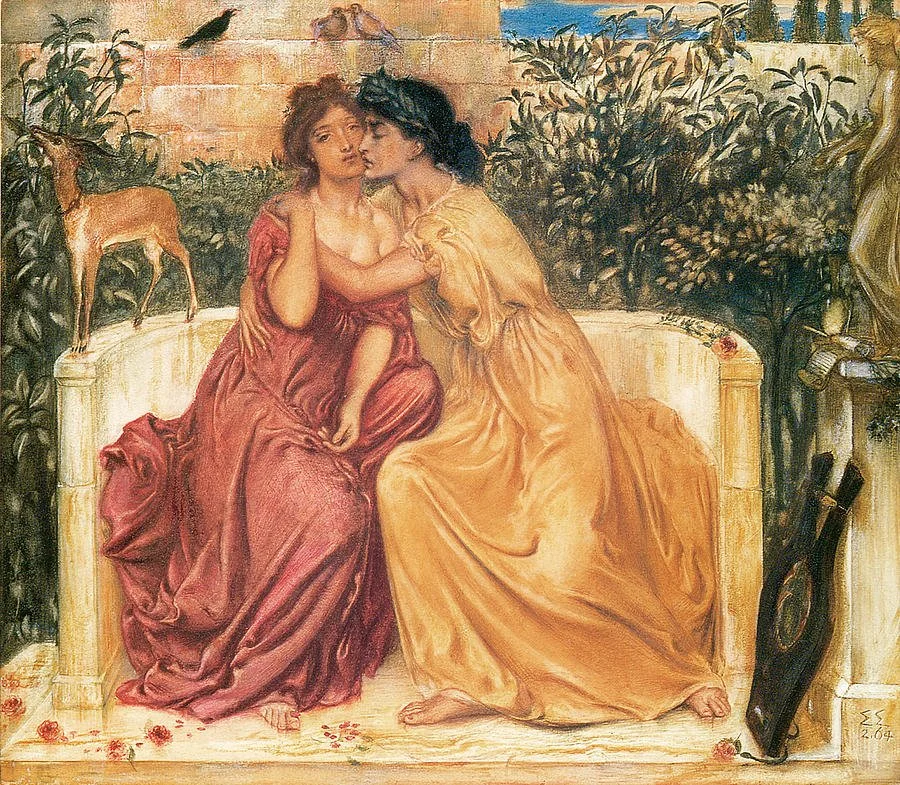
A ‘tribas’ — the ancient Greek term for a woman who loved women — for sure, she was open and utterly unapologetic about her sexuality. Her reputation as a lover of beautiful women stretched across the ancient world, through the Renaissance, and into the Victorian era. The Suda, an ancient Byzantine encyclopedia, even hilariously claims she married Kerkylas of Andros — a name that translates, essentially, to “Penis from Man-Island” — an obviously bad straight man’s joke. She was the first lesbian icon singer-songwriter and was romanticized across millennia for it.
The word “lesbian” (for Lesbos) made its first clinical appearance in 1870, just a year after “homosexual” was standardized as a term, though ‘Sapphist’ (for Sappho) was also a competing term at the time, as was ‘Uranian’ for gay men. Victorian women reaching back to Sappho to name themselves were doing exactly what queer historians do now — finding themselves in the ancient record and claiming it. We have always been here. Eventually “lesbian” won out.
What little of her work does remain — in the three or four large fragments we have of her poetry — shows the West’s first surviving love song, full of tender, sincere longing; real vulnerability, open erotic passion, raw, emotional, and personal — all about women loving women.
It cemented her legacy and created a word many women wear Visibly with Pride.