🏳️🌈🏺🛐 Bible 11 Jesus heals the Pais
🏳️🌈🏺2-Gay in History: Bible 11🛐🏳️🌈
Remember that time Jesus healed a gay man’s lover? Really? It’s told in both Luke 7 and Matthew 8:5
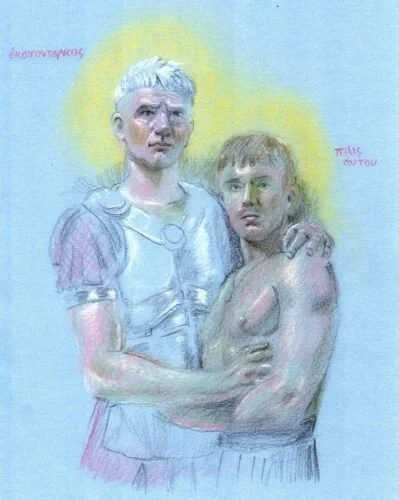
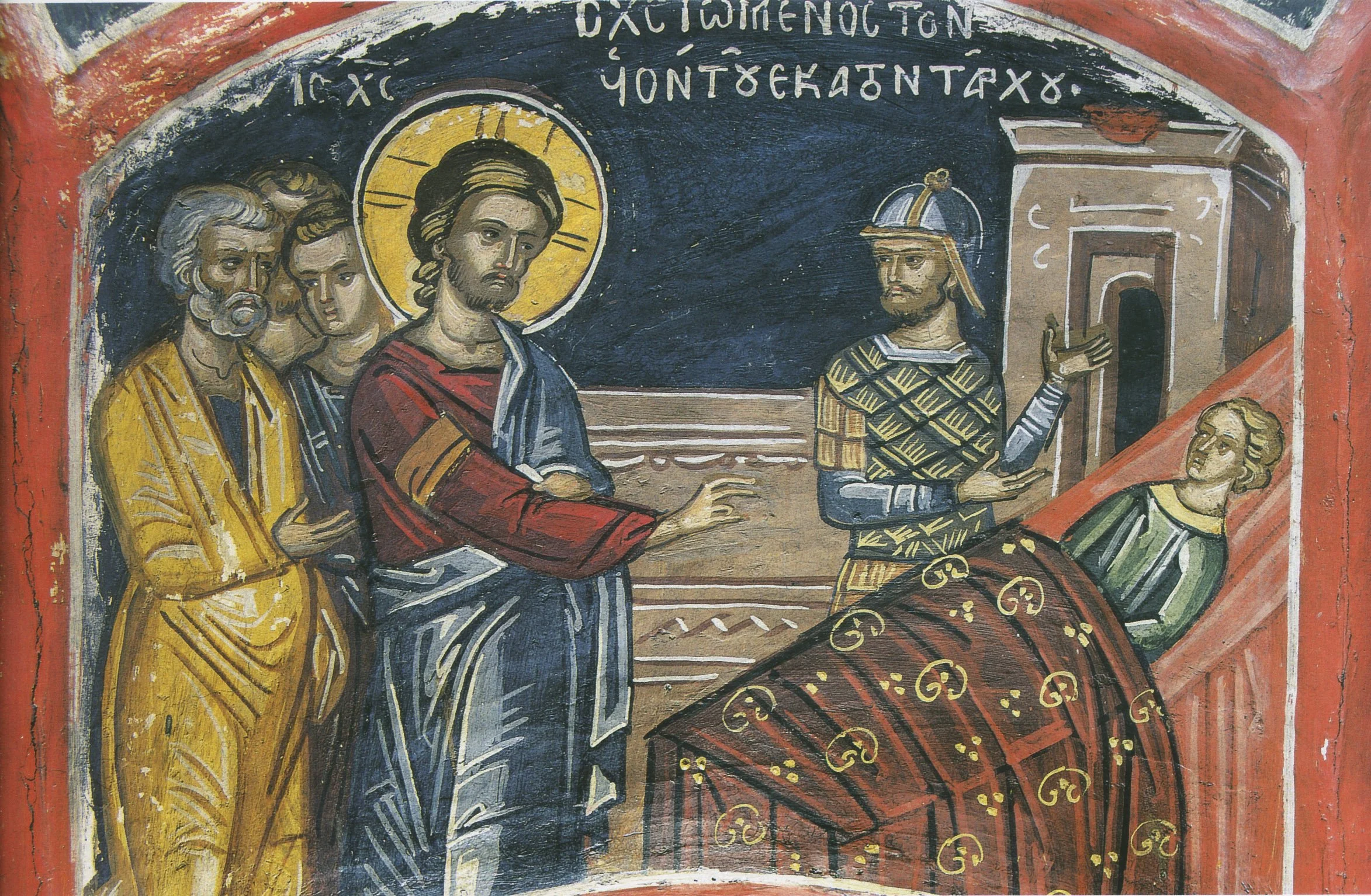
Jesus enters Capernaum and is approached by a centurion, an officer in the Roman Legion, whose ‘pais’ is gravely ill. The centurion’s ‘pais’ is ‘entimos’ to him — beloved, adored, valued. Jesus offers to come heal him, but the centurion counters:
“Lord, I am not worthy to have you come under my roof — but only speak the word and my ‘pais’ will be healed. For I too am a man under authority, with soldiers under me. I say to one, ‘Go,’ and he goes, and to another, ‘Come,’ and he comes, and to my ‘doulos’ — my slave — ‘Do this,’ and he does it.”
Jesus marvels at the centurion’s faith, says the word, and heals the ‘pais’.
You probably remember this story as a healing of a slave. But it wouldn’t have read that way to a Greek or Roman listener. When the centurion demonstrates his authority, he uses ‘doulos’ — slave — for his other servants. But for the sick person, both tellings are careful: the narration introduces him as a ‘doulos,’ but the centurion himself always calls him ‘pais.’
‘Pais’ has several meanings: first, boy or child; second, servant or slave. But just as “boy” or “partner” carries different weight depending on context in the gay community today, so did ‘pais’ then. In secular military contexts it is sometimes translated as “tentboy” to distinguish it — the younger companion, servant, and often sexual partner of an officer.
By this point Judea had been shaped by Greek culture for centuries and Roman culture for generations. Rome assigned sexual roles by rank and status. A servant was a socially acceptable receptive partner, especially for an officer. Soldiers were prohibited from legal marriage during service, and many officers were permitted, even expected, to have a younger soldier or servant as a sexual companion and tentmate. The word for that person was usually ‘pais,’ borrowed from the Greek term for the younger partner in a traditional—conceptually coercive—mentor relationship, called pederasty.
Every Greek speaker in the audience would know those resonances. Even Jesus, raised near a Greek city and formed within a culture long shaped by Hellenic influence, would know the difference between ‘pais’ and ‘doulos.’
And then a centurion, risking his status and reputation by coming to a Jewish healer rather than to Roman shrines—possibly why he’s not eager to have Jesus at his house — that risk is itself a measure of how deeply he ‘entimos’ this ‘pais.’ Scholars Theodore Jennings and Tat-siong Benny Liew recognize this distinction and argue it is deliberate.
Jesus compliments the man as having more faith than all in Israel, and heals the ‘pais’ without hesitation or qualification. He doesn’t admonish him, ask for clarification or repentance, but compliments and gives immediate aid. Maybe Jesus never spoke explicitly about gay people in his ministry — but he ministered freely to them and praised their faith without condition.
Could the centurion have simply adored his totally platonic slave? Used a deliberate special term of endearment, while he implied other slaves with whom he didn’t share some special bond? Could he have risked his standing, even if he wasn’t Roman, for purely professional or compassionate reasons? Sure, it is a completely valid, if potentially tone deaf, reading of the text but it ignores the intentionally shifting words and their subtextual connotations.
It’s like someone in a gay bar mentioning their “partner at home” — it could mean a business partner they happen to live with. But, that’s not what anyone would assume. And that blaring implication is exactly what millions of Bibles have chosen to translate into the closet.