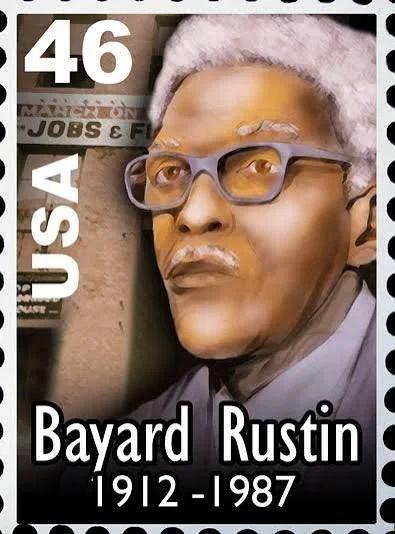
🏳️🌈🏺 Bayard Rustin
🏳️🌈🏺2-Gay in History🏺🏳️🌈
“The barometer of where one is on human rights questions is no longer the black community, it’s the gay community. Because it is the community which is most easily mistreated.”
— Bayard Rustin, 1986
He said that at seventy-four, to anyone who would listen, after fifty years of being the most useful man in American protest for rights and liberties and most often quietly dumped from the movement. He wasn’t lamenting for himself but offering a real test for the human conscience.
Before Montgomery
Over a decade before Rosa Parks, Rustin was refusing the indignity of segregation, and getting beaten and jailed for it.
In 1942, on a bus from Louisville to Nashville, Rustin sat in the second row instead of the back. The driver called the police, who dragged him off and beat him. He didn’t fight back — he stood still, arms out, and told them there was no need to beat him, he wasn’t resisting. Three white Southern men got off the bus to intervene, and when an officer raised his club at the smallest of them, Rustin stepped between them and took the moment himself, insisting there was no need for anyone to fight on his behalf. An elderly, well-dressed man in the group followed the police into town and turned up again at the district attorney’s office, determined to see Rustin get justice. There, Rustin gave his own account of what happened and turned to the young officer who’d ridden up front with him: watch me, and stop me if I say anything that isn’t true. The officer never once corrected him. Rustin was released without charge.
A year later, he refused to report for his draft physical, objecting not just to war but to serving in a still-segregated military, and the federal government put him in prison for it. He organized against segregation inside the prison.
Released in June of 1946, he immediately started planning his next arrest. The Supreme Court had just ruled in Morgan v. Virginia that segregation on interstate buses was unconstitutional. The South, predictably, did not care. So in April 1947, Rustin and CORE put sixteen men in interracial pairs onto Greyhound and Trailways buses out of Washington, D.C., headed south. They called it the Journey of Reconciliation. History would later call it the first Freedom Ride.
In Oxford, North Carolina, a driver called the police because Rustin wouldn’t move from his seat. The cops declined to arrest him, and the bus simply sat there for forty-five minutes while neither man blinked. Near Chapel Hill, a mob attacked the riders and the police arrested the victims. Rustin was sentenced to a chain gang. He surrendered himself in 1949 and served it, then published his journals from the segregated road gang.
He was thirty-seven, and had been jailed for his convictions several times, but he was about to be jailed for something else that would get his role in civil rights repeatedly erased.
“Bayard’s Problem”
Rustin was gay, and he was not particularly interested in pretending otherwise. In the 1940s he had a serious relationship with Davis Platt, a white man, and did not go to great lengths to hide it. Colleagues at the Fellowship of Reconciliation referred to his sexuality in hushed tones as “Bayard’s problem.” His boss, A.J. Muste — a genuine radical, a man who believed in revolution — believed homosexuality was an illness.
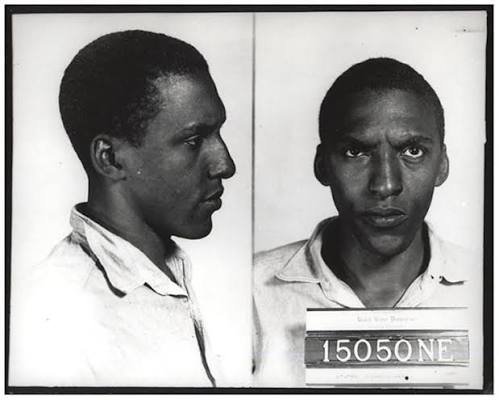
In January 1953, after a speech in Pasadena, Rustin was arrested in a parked car with two other men and charged with what California then called sex perversion. He served jail time. He was registered as a sex offender. And the Fellowship of Reconciliation, a pacifist, radically progressive Christian organization dedicated to the dignity of all persons, fired him.
It happened again in 1960. Rustin, King, and A. Philip Randolph planned to picket the Democratic National Convention over the party’s tepid civil rights platform. Congressman Adam Clayton Powell Jr. — a Black man, a Harlem minister, a powerful ally on paper — sent word to King: call it off, or I tell the press you and Rustin are lovers.
It was a lie. King backed down anyway, and Rustin resigned from the SCLC rather than be a liability. James Baldwin, who was watching all of this closely for Harper’s, wrote that King had lost much moral credit in the eyes of the young.
What He Gave King
When Rustin arrived in Montgomery in 1956, Martin Luther King Jr. was twenty-seven years old, brilliant, and improvising. He had read Gandhi. He had not yet lived him. There were guns in the house and armed men on the porch, because King was, reasonably, a man afraid for his family.
Rustin had spent two decades in nonviolent practice — the prisons, the chain gang, a 1948 study trip to India to learn the method directly from the source. Rustin shaped and taught King how to run a movement, how to embrace nonviolence as a way of life — and despite everyone whispering in his ear to cut Rustin loose, King listened to the gay man’s lessons on authenticity and morality.
The King the world remembers — the disciplined, immovable, morally unanswerable King — is Rustin’s influence. Ralph Abernathy said it plainly after Rustin died: King would not have been the person he was without Rustin’s tutelage.
And then in 1963, with two months’ notice, despite efforts to sideline him, Rustin built the March on Washington for Jobs and Freedom. A quarter of a million people. Buses, trains, sanitation, water, sound systems, marshals, box lunches, a schedule that held with King at its summit. Randolph took the title of director specifically because homophobia made Rustin too great a liability to hold it publicly, then handed Rustin the actual reins.
Two weeks before the march, Strom Thurmond stood on the Senate floor and read Rustin’s Pasadena arrest into the Congressional Record. He thought outing a man would stop a movement.
Two hundred fifty thousand people showed up anyway. King said he had a dream while standing on Rustin’s shoulders.
If Rustin had been closeted he would be as famous as King, but instead he was authentic, which is why he deserves so much more now.
He spent the rest of his life quietly working on labor rights and socialist economic messages, until in the 80s he could finally urge others to live as authentically as he had all his life — the real barometer of social justice.
Jobs and Freedom
People forget the rest of the name. It was the March on Washington for Jobs and Freedom, and the jobs half was not decoration — it was Rustin’s whole thesis.
He was a socialist his entire adult life, and he understood something the movement’s respectable wing kept losing: you cannot desegregate a lunch counter for a person who cannot afford lunch. In 1965 he and Randolph founded the A. Philip Randolph Institute, integrating all-white unions and organizing Black workers into the labor movement. From 1966 to 1968 they campaigned for a Freedom Budget for All Americans — a ten-year plan to abolish poverty and unemployment outright. He later chaired Social Democrats, USA.
Civil rights, labor rights, economic justice: for Rustin these were always one fight against a system that decides some people’s dignity is negotiable.
The Last Fight
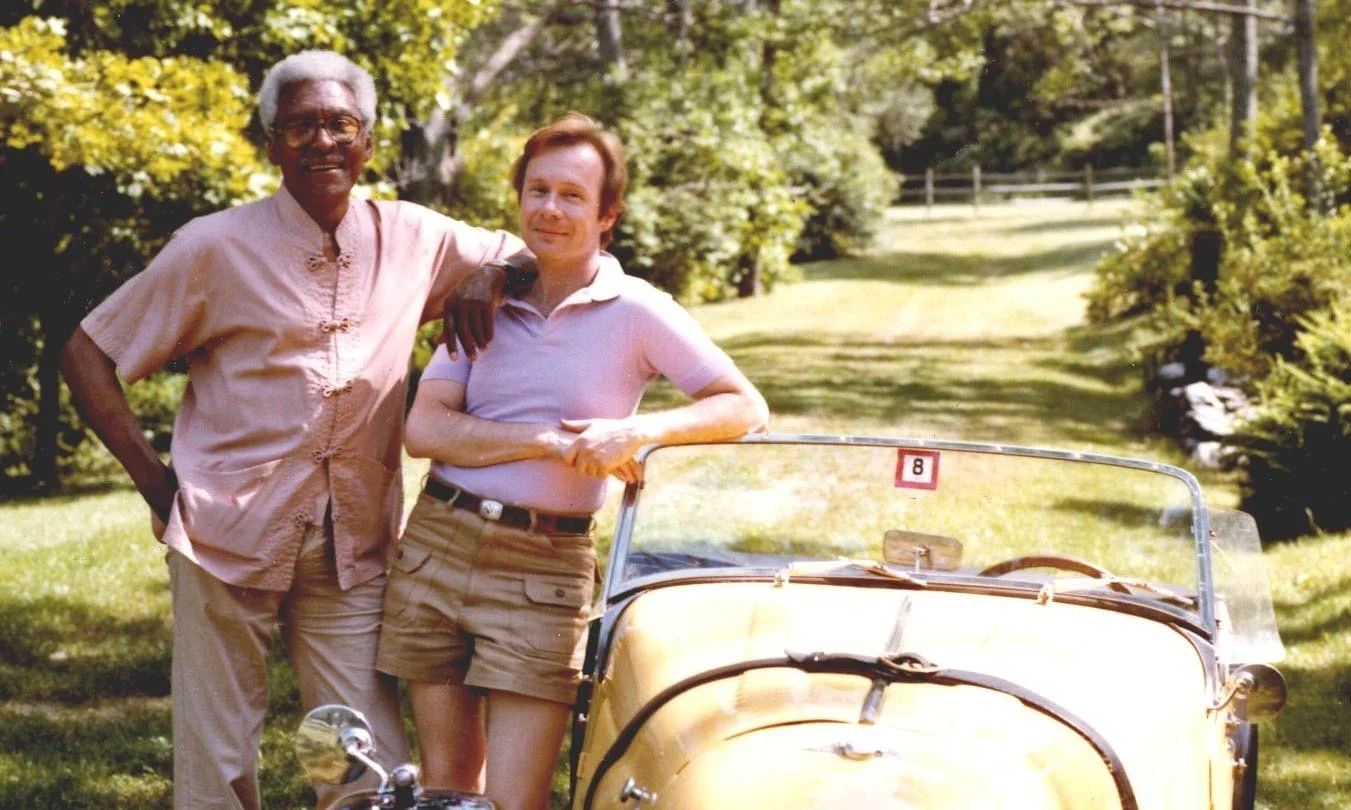
In 1977, at sixty-five, Rustin met Walter Naegle in Times Square. They were together for the last decade of his life.
Because two men could not marry, and because Rustin knew exactly how the law treats people it doesn’t recognize, in 1982 he legally adopted Naegle — a seventy-year-old man adopting a partner thirty-seven years his junior, because that was the only door the state left open. If you want one image that explains what came before us, that’s it.
In his final years he testified for New York’s gay rights bill, spoke for people with AIDS, and told every audience that would have him that gay people were now the barometer — that you could measure anyone’s commitment to justice by where they landed on this one question. He died in August 1987.
In 2013, Barack Obama awarded him the Presidential Medal of Freedom, and said out loud that this country had denied Rustin his place in history because he was gay. Naegle accepted it on his lover’s behalf. In 2020, California pardoned him for the 1953 conviction, sixty-seven years late.
He spent his life being told he was too much of a liability to stand at the front. He stood at the front of everything anyway, willing to prop others up for the dignity of a movement, quiet about his own. He never asked for the credit, but it is ours to give now.
We’ll be discussing Time on Two Crosses—Rustin’s collected writings on Wednesday 7/28/26 at 6:30 in the lounge
And watching Rustin Netflix Documentary Thursday the 29th at 7:30.