🏳️🌈🏺🇮🇷 Abassid Persia
🏳️🌈🏺2-Gay in History🏺🏳️🌈
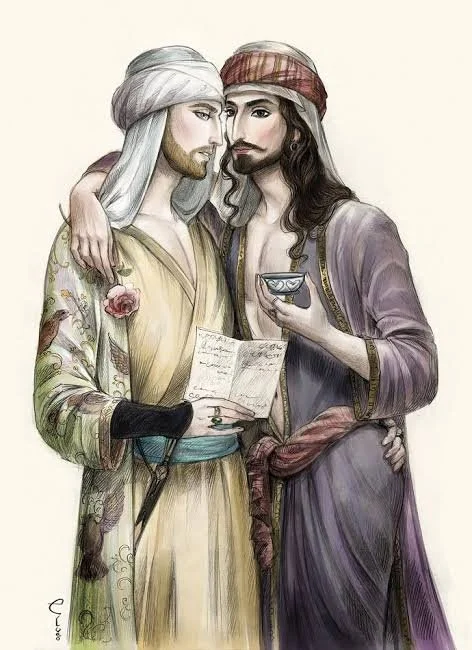
The Sassanids fell to the Arabs in 651 but Persia did not disappear into Islam but transformed it. In less than a century, the Abassid Caliphate brought Persian bureaucracy, Persian style, & the wine and the beautiful boys to a glittering empire.
“In the bathhouse, everything clothes had been hiding is suddenly on full, unhurried display, and he tells you flatly to look your fill, drink him to drunkenness”
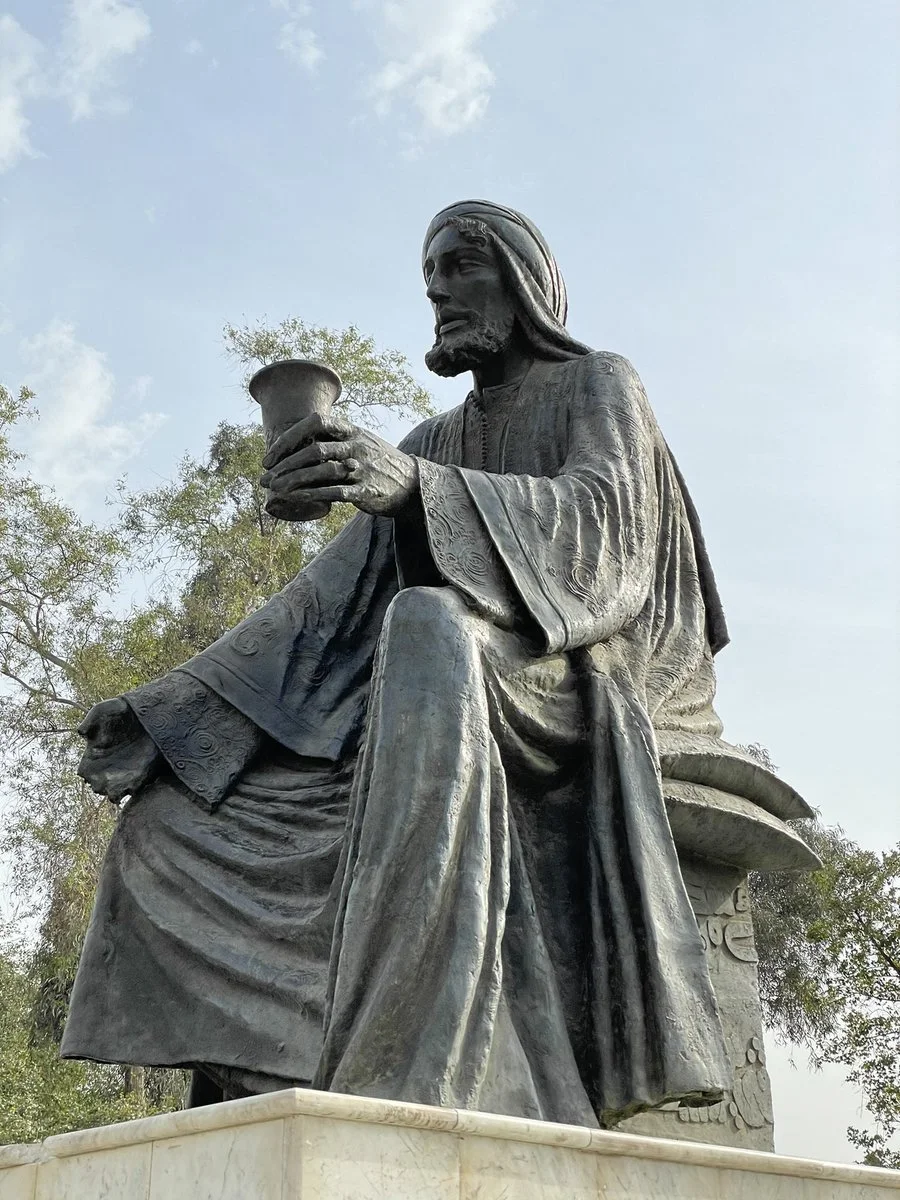
—the greatest poet of the age, Abu Nuwas, born to a Persian mother, but writing in Arabic, & drinking at all the court parties. His poetry drips sensuality. He wrote about wine & he wrote about ‘ghilman’—the young male cupbearers who poured it. He never needed a closet, but wrote openly about the love of men, & the Caliph paid him handsomely for it. He actually turns up as a character in the ‘1001 “Arabian” Nights.’
That Caliph’s son, al-Amin loved the poetry & the male attendants so much that his mother, worried about grandchildren. She dressed slave girls in boys’ clothes—cropped hair, painted-on mustaches, which succeeded in producing an heir. The look caught on & became a court fashion, girls dressed as boys.
As usual women are sidelined in what survives but the ‘Encyclopedia of Pleasure,’ a tenth-century sex manual, devotes chapters to ‘sahq’—lesbian love, and plenty more to boy love.
Al-Jahiz, the finest prose writer of the age, wrote ‘The Boasting Match Between Girls & Boys’—a formal debate where an advocate of male love & an advocate for female lovers argue it out. Both arguments are treated as valid and neither framed as sin. Homosexuality and gender non-conformity were open subjects of discussion and completely valid, if illegal.
Islamic law at the time technically prohibited male homosexuality or ‘liwat’ & the penalties were severe on paper. But it required four eyewitnesses to an individual act, prosecution was close to impossible. Law on the books, wine poetry in the palace. The Persian tradition.
And the Persian language was coming back. Next week Rudaki, Rumi, Hafez.