🏳️🌈🏺🛐 Women in the Bible 13
🏳️🌈🏺2-Gay in History:Bible 13🛐🏳️🌈
Paul says that women shouldn’t teach, but that’s not what Paul said.
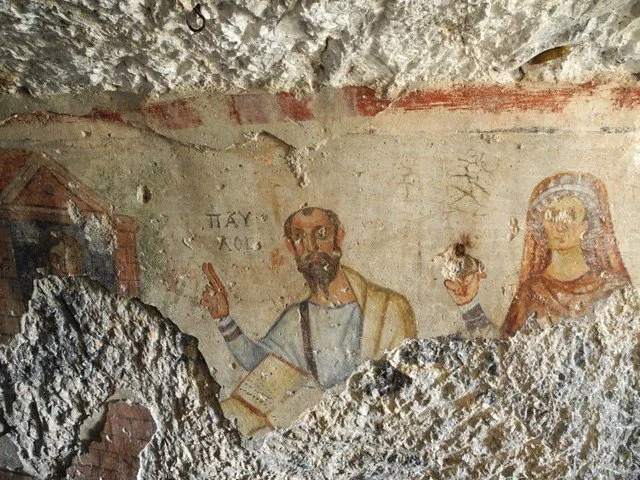
In his own letter to Rome — the same letter containing Romans 1 — Paul closes with greetings to Phoebe, whom he calls a deacon; Priscilla, his fellow worker in ministry; and Junia, whom he names “prominent among the apostles.”
But you’ve been told Junias was a man? No, Junia was a common Roman woman’s name. There is no record anywhere in ancient literature of a male name “Junias.” It never existed until around the 12th or 13th century, when scribes began quietly changing her name in the manuscript tradition to an invented male form, as scholar Bernadette Brooten says: “Because a woman could not have been an apostle, the woman who is here called apostle could not have been a woman.”
Eldon Epp traced the manuscript trail and confirmed it — a woman honored as an apostle for over a thousand years had simply been renamed, a lie that wasn’t exposed until a few decades ago.
Mary Magdalene is present at the crucifixion when the male disciples have fled. She is first to the tomb in all the gospels. She is the one Jesus calls by name on Easter morning and sends to tell the others. The Eastern church has always called her “apostle to the apostles.” Her importance is not ambiguous— over and over again she is named.
But the lie you’ve been told has a birthday: on September 14, 591 CE, Pope Gregory “the Great” gave Homily 33 and merged three distinct women into one: Mary Magdalene, Mary of Bethany, and the unnamed sinner of Luke 7. He suggested the oil she used on Jesus was her perfume and that the seven demons cast out of her were the seven deadly sins, lust especially. And in one sermon, the first witness to the resurrection became a repentant sex worker. The Catholic Church finally quietly corrected this lie in 1969 and Pope Francis elevated her feast day to equal standing with the male apostles, just 1500 years late.
Then there is Thecla, the most popular female saint after Mary in the early church, called “apostle and equal to the apostles” in the Eastern tradition. Her story was wildly well read in Greek, Latin, Coptic, Syriac, and Armenian. Eventually so impressed by her faith, Paul commissions her to go and teach the gospel. She survived two executions, baptized herself, and spent decades healing and preaching. Women across the early church used her story as inspiration to teach and baptize.
Then around 200 CE the “church father” Tertullian rages against the text by name, citing Timothy — “let them keep silence and ask their husbands at home” — to argue no woman could minister. But he was using a letter widely considered written after Paul’s death, borrowing Paul’s name, to suppress a story about Paul commissioning a female apostle in a very well known text.
The other verse he uses is much like the first: 1 Corinthians 14:34 interrupts Paul mid-argument and contradicts what he says earlier in that same letter. It also appears in different lines in different manuscripts, if at all — a pretty strong sign of later copy/paste directly from Timothy. Neither that verse from Corinthians nor Timothy appears in the most ancient collection of Paul’s letters that we have (P46), while the Acts of Paul and Thecla circulated widely a century before any of those verses appear. The church used almost definitely forged letters to overwrite Paul’s actual life and ministry.
In 1983 Elisabeth Schüssler Fiorenza published In Memory of Her — its title taken from Jesus’s own words about the woman who anoints him: “wherever the gospel is preached, what she has done will be told in memory of her.” She reconstructed what the early church actually looked like before imperial patriarchal structures displaced women from leadership, arguing the Jesus movement began as a discipleship of equals. The evidence was always in the text, hiding under the lies we were told.
The tools used against women are all too familiar: manuscript alteration, canonical exclusion, disputed verses cited as settled law, distinct figures collapsed into a convenient stereotype, inconvenient texts suppressed. People renamed, shamed, or silenced. Each time the church deciding that what the text said could not mean what it said, because the people it honored challenged prejudices.
When Christianity moved from a radical people’s movement to the imperially sanctioned church of empire, the cost of respectability was paid by everyone on the margins of the fiercely paternalistic Roman world.
But in the last half century scholars and feminists have done amazing work starting to uncover and restore these women of the Bible. The recovery work for queer people is even newer and just beginning. Both projects are the same: reading the whole verses, what’s actually there, then refusing the lies and forced interpretations layered over it, and insisting the Bible is big enough to hold the people who have always been there.