🏳️🌈🏺⚖️ Marriage and Weddings
🏳️🌈🏺2-Gay in History⚖️🏳️🌈
United States v. Windsor (2013) & 303 Creative v. Elenis (2023)
Edie Windsor and Thea Spyer were together for 40 years. When Thea died in 2009, Edie inherited everything — as any spouse would. But under the Defense of Marriage Act, signed by Clinton in 1996, the federal government didn’t recognize their Canadian marriage even though New York did. The IRS sent Edie a $363,000 estate tax bill. No opposite-sex widow would ever have owed it. She paid it, and then sued the government.
By 2013, same-sex couples were married in a growing number of states but invisible to the federal government — locked out of over a thousand federal statutes that turn on marital status. The Supreme Court ruled 5-4 in Windsor’s favor. Justice Kennedy wrote that DOMA’s effect was to “humiliate” same-sex couples and their children. The federal government had to recognize all those legally married in their state.
Two years later, Obergefell would make marriage equality national. But the carveouts were already coming.
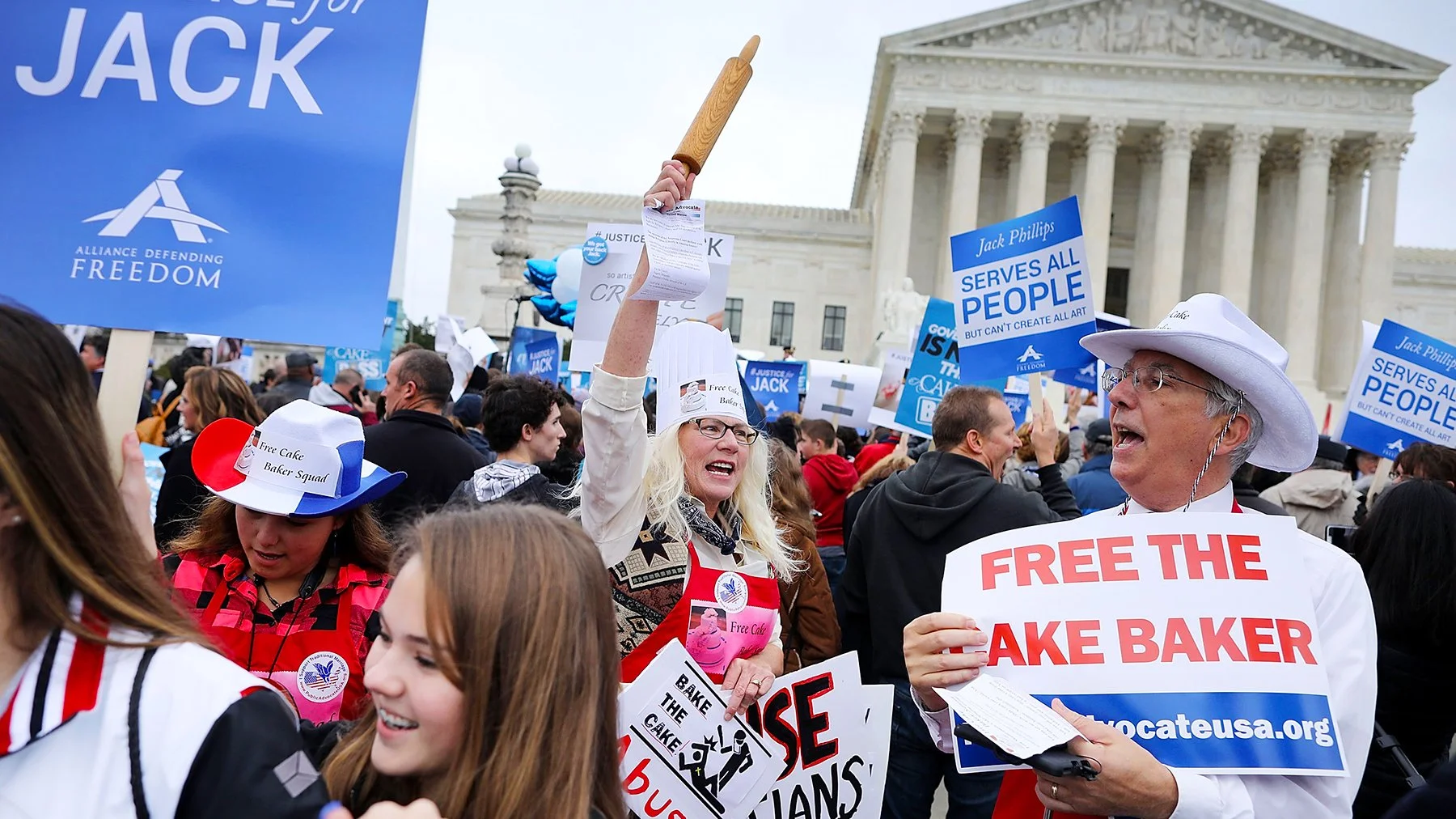
In 2018, the well funded christian right group “The Allaince Defending Freedom” brought the Masterpiece Cakeshop case—a baker refused to make a wedding cake for a same-sex couple — which ended on procedural grounds without settling the larger question.
The ADF then manufactured another case, 303 Creative v. Elenis. Colorado web designer Lorie Smith sued preemptively, before ever turning away a same-sex client, arguing Colorado’s anti-discrimination law would violate her First Amendment right not to create expressive content that conflicted with her religious beliefs.
Her legal team cited a request from a man named “Stewart” as proof of imminent threat. When a reporter finally tracked Stewart down, he was straight, married to a woman, and had never contacted 303 Creative—it was a total fabrication to strengthen their case.
It didn’t matter to the Court, which ruled 6-3 in her favor. Gorsuch wrote that compelling her to make a creative product was compelled speech. Sotomayor dissented: for the first time, a business open to the public had a constitutional right to turn away a protected class.
Justice Sotomayor’s dissent pointed out that the majority’s logic has no coherent limiting principle.
Consider: a gay bartender with a reputation for bespoke cocktail pairings, or a chef who creates custom tasting menus, is arguably doing exactly what Lorie Smith supposedly does — producing creative, expressive work. If a state anti-discrimination law cannot compel Smith to create a wedding website for a same-sex couple, it is not clear why it could compel a gay bartender to craft a custom anniversary cocktail for a straight one.
The only reason it likely plays out differently in practice has nothing to do with legal consistency — it has to do with who brings these cases, who funds them, and, ultimately, who sits on the Court. Sotomayor’s dissent suggests the real limiting principle isn’t a principle at all. It’s a prejudice dressed in constitutional language.
There is a reason why the Masterpiece case was decided differently than the 303 case— Trump and Mitch McConnell stole 2 seats on the Supreme Court
Also Speaker Mike Johnson worked for the ADF during the lead up to the Masterpiece cakeshop case. Just FYI
Even when the state eventually recognizes your rights, it doesn’t mean you’re safe from legal discrimination.