The Bible Blog Series from 2026



🏳️🌈🏺2-Gay in History: Bible 1🛐🏳️🌈
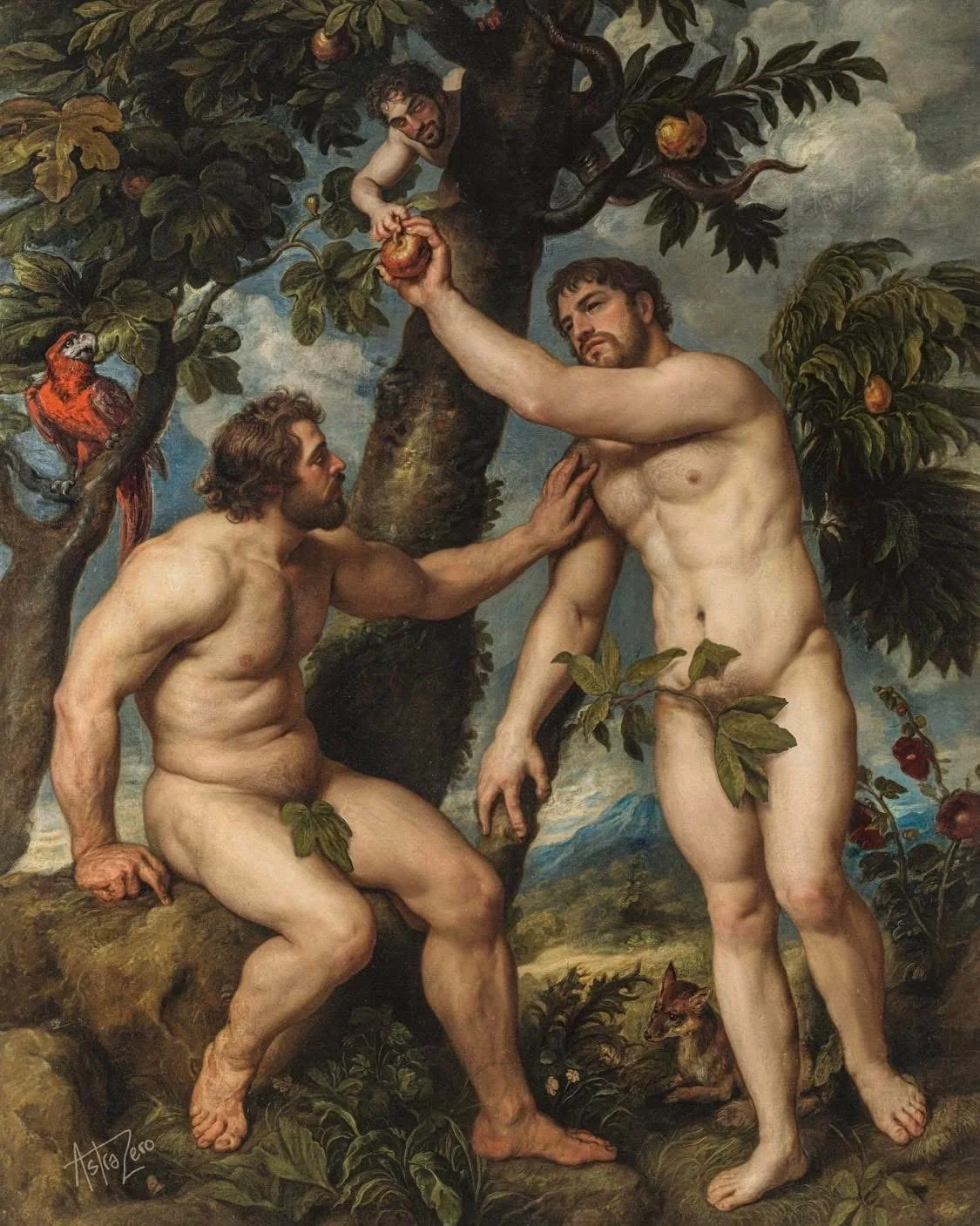
Genesis doesn’t enforce heterosexuality—it sanctifies companionship.
The sacred good is not “male with female,” but human with a partner who corresponds, who complements.
Genesis 2 is often invoked to defend “traditional” marriage yet the story’s own logic points somewhere more inclusive. When read closely, Genesis becomes less a rulebook about gender and more a meditation on human companionship.
The narrative begins not with “man” but with ’adam’—a gender-neutral (undifferentiated) human formed from the earth. The first divine assessment in the Bible is:
“It is not good that the human should be alone.”
The first issue is isolation. Gen. 2:18
Unfortunately for that Oklahoma Psychology student, she’d get a 0 in hermeneutics as well
God promises to make a “helper”“corresponding to” the human (ʿēzer kenegdô).
‘ēzer’ is used mostly of God helping Israel—so it cannot mean an obedient wife.
‘Kenegdô’ means “matching, facing, equal, corresponding.”
This is the relational condition: a partner who answers the human’s loneliness with mutual support.
The text then depicts God forming animals—not as comic relief, but as a process of discernment. None are found to be a true counterpart. The goal is not heterosexual pairing; the goal is finding the one who corresponds, like to adam.
Scholars like Phyllis Trible and Ken Stone argue that the hermeneutical key is this:
Genesis 2 does not prescribe a universal model of “one man + one woman” (the Bible was definitely open to polygamy)
It narrates God’s search for a relationship of equality and mutual comfort.
From this logic, queer theology makes a natural—though not original (see the Talmud)—conclusion:
If God’s concern is the human need for a partner who truly corresponds, then any relationship that embodies mutual help, shared life, and chosen companionship fulfills the text’s purpose.
This is not claiming the ancient author intended to affirm gay love; rather, it’s following a canonical pattern where later communities draw broader, life-giving meanings from earlier stories, where no one must walk alone.
🏳️🌈🏺2-Gay in History: Bible 2🛐🏳️🌈
Genesis 19 is one of the most misused passages in Scripture. It has been weaponized against queer people—but the Bible itself never calls Sodom’s sin “homosexuality.” Every ancient interpretation points to something else: violence and suspicion in place of hospitality.
In the story, two angels arrive in Sodom after it lost a recent war (Gen 14). Lot meets them at the gates and hides them at his home. Worried about spies and foreigners, the townsmen surround Lot’s house and demand the strangers so they may “know” them, an obviously violent double entendre, and allusion to gang-assault, a wartime act meant to humiliate enemies.
Lot’s shocking offer of his daughters seems to try to divert violence from his guests, not protect anyone’s virtue. The mob is far more wary of strangers than aroused.
This same script appears in Judges 19, where a gang demands access to a male guest and he throws them his slave girl to be abused in his stead, the threat and sexual violence is condemned. The Bible presents both scenes as nightmares of inhospitality, paranoia, and patriarchal brutality, not homosexuality.
Every later biblical reference agrees:
• Ezekiel 16:49— Sodom’s sin was arrogance, neglect of the poor, and oppression.
• Wisdom 19:13— “hatred of strangers.”
• Isaiah 1:10— injustice against the vulnerable.
• Matthew 10:14 and Luke 10:10— Jesus uses Sodom as a warning about refusing hospitality, not anything sexual or homosexual.
The idea that Sodom was destroyed for same-sex desire doesn’t appear until over a thousand years later, and six centuries after the Hebrew Bible was written.
Philo is the first to sexualize the story, claiming the men of Sodom craved the divine (“strange”) flesh and refused God’s messengers. While Clement of Alexandria in 190 CE becomes the first writer to use Sodom against men who love men.
None of this reflects the Torah’s own message of radical hospitality to the stranger, and its own internal commentary about the passage.
It took another few centuries before it became a common misinterpretation . But the context shows a paranoid people acting violently, not two people engaging in consensual or loving sexual activity.
🏳️🌈🏺2-GAY IN HISTORY: Bible 3 🛐🏳️🌈
If someone quotes Leviticus 18:22 (or 20:13) at you, start with reading the whole chapter. Leviticus 18–20 isn’t a universal sexual ethic; it’s a temple-centered holiness system—taboo vocabulary (“abomination”), impurity logic (“defilement”), & land theology (“the land will vomit you out”).
Leviticus—actually codified in 5th-ish century BC—tells you what it’s doing. It frames the list as us vs. them: “You shall not do as they do in the land of Egypt… or in the land of Canaan” (18:3). It’s boundary-making for a small, anxious, vulnerable, people sandwiched between permissive (status-based)* superpowers—it marks rules to scare their own people & keep the land “clean.”
It’s just patriarchy in legal form. These chapters address Hebrew MEN & regulate who can access which bodies in a kinship economy (inheritance, honor, household). The Hebrew phrase “as with a woman” (lit. “the lyings of a woman”) codes a gender hierarchy in which a free male must never be placed in the socially feminized sexual role. Women are property & only explicitly prohibited to be with animals, because bestiality is treated as category-collapse pollution with social inferiors; both parties are killed.
Then Leviticus 20 shows its hand: purge logic. Death penalties for boundary breaches—adultery, cursing parents, only certain kinds of incest, fashion choices, psychics, blasphemers, businesses open on the Sabbath, & foreign religious practices—followed by “their blood is upon them,” i.e., bloodguilt blame shifting. If your modern ethic depends on importing that land/temple purge regime, you’re not reading “timeless morality”; you’re an ancient sacrifice cosplayer.
Just remember: the holiness code has death penalties for lots of things, is cool with slavery (Lev. 25) & has a lot of feelings about beard grooming. So treating this as a buffet where the only eternal item is condemning queer intimacy isn’t faith—it’s hate.
TL;DR: these verses belong to an ancient purity-patriarchy project with premises that no one, including Christians, still accepts. Read them whole, put it in context, & refuse to let temple-boundary norms be used as a veto on mutual-consenting love.
* neighboring places like Persia, Neo-Babylonia, Phoenicia, Lydia, & Canaan had more status-based, rank, & honor rules for homosexuality. Greco-influenced states were their own thing that eventually ruled the Jews & were far more open to same-sex relations, further entrenching the Hebrew prohibition as boundary making.
** Even in modern Ultra-Orthodox Judaism, Leviticus is not practiced as a functioning legal system. Its punishments and land-defilement logic have been legally rendered inactive after the Second Temple Period and softened by rabbinical interpretation—while Christians quietly ignore almost all of it altogether.
And sorry for the Family Guy meme
🏳️🌈🏺 2-GAY IN HISTORY (Bible 4)🛐🏳️🌈
“your love to me was wonderful,
surpassing the love of women.”
(2 Samuel 1:26)
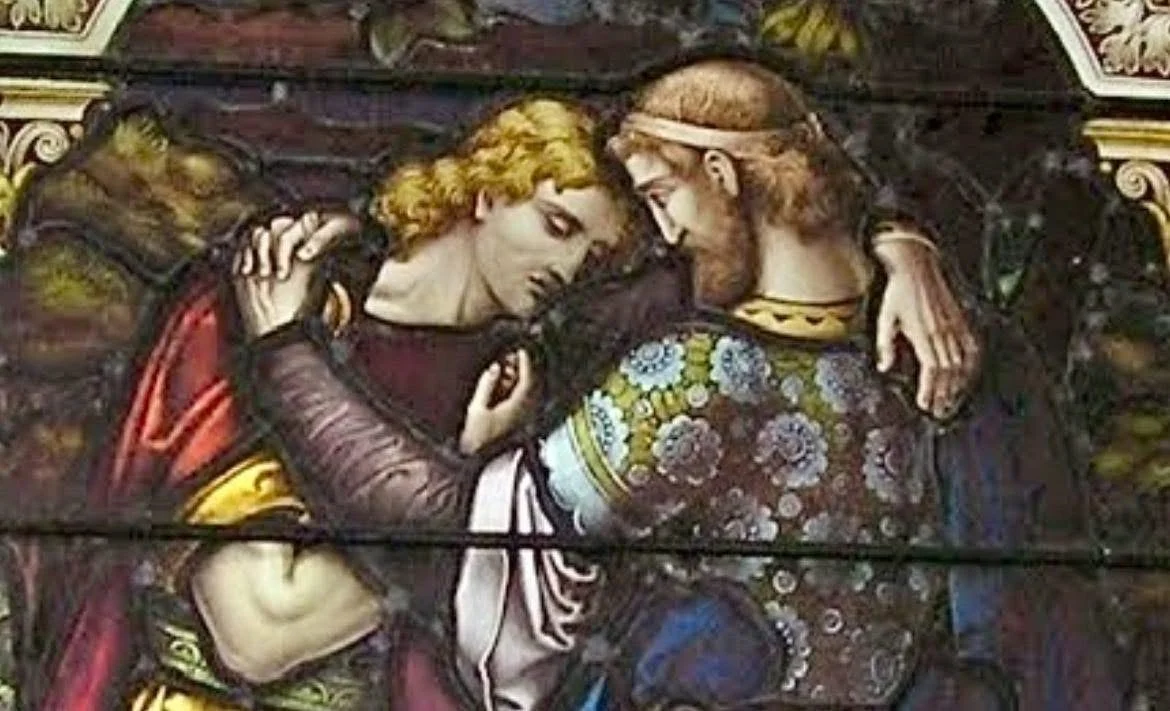
There are queer people in the Bible hiding in plain sight in the text. None is written with more intensity, repetition, and emotional excess than the relationship between David and Jonathan, son of Saul.
When they first meet, the text tells us:
“The soul of Jonathan was bound to the soul of David, and Jonathan loved him as his own soul.” (1 Samuel 18:1)
The Hebrew nefesh (soul/life/self) is “knit” or “bound,” followed immediately by a covenant and a dramatic exchange of clothing and weapons—royal symbols.
Samuel expounds on this love again and again:
“Jonathan made David swear again by his love for him, for he loved him as he loved his own soul.”
(1 Samuel 20:17)
When they part in secret, they share an ambiguous kiss:
“They kissed each other and wept together—David wept the more.”
(1 Samuel 20:41)
And when Jonathan dies, David’s grief becomes poetry:
“I grieve for you, Jonathan my brother;
very pleasant have you been to me;
your love to me was wonderful,
surpassing the love of women.”
(2 Samuel 1:26) (8:1:26)
That last line has echoed for three thousand years.
Ancient interpreters did not avoid it. Rabbinic tradition held David and Jonathan up as the model of enduring love—“a love not dependent on anything” (Mishnah Avot 5:16). Early modern scholars were more cautious, but many agree on this much: the language is intentionally charged. As Martti Nissinen puts it, the narrative “leaves the possible homoerotic associations to the reader’s imagination.”
Is this a sexual relationship? The text never says so, but it is clearly homoerotic. It is more intimate, embodied, and emotionally elevated than nearly any other bond in the Bible.
For queer readers across centuries, David and Jonathan have functioned as a mirror: proof that the Bible knows same-sex love that is loyal, covenantal, public, and mourned without shame.
🏳️🌈🏺 2-GAY IN HISTORY: Bible 5 🛐🏳️🌈
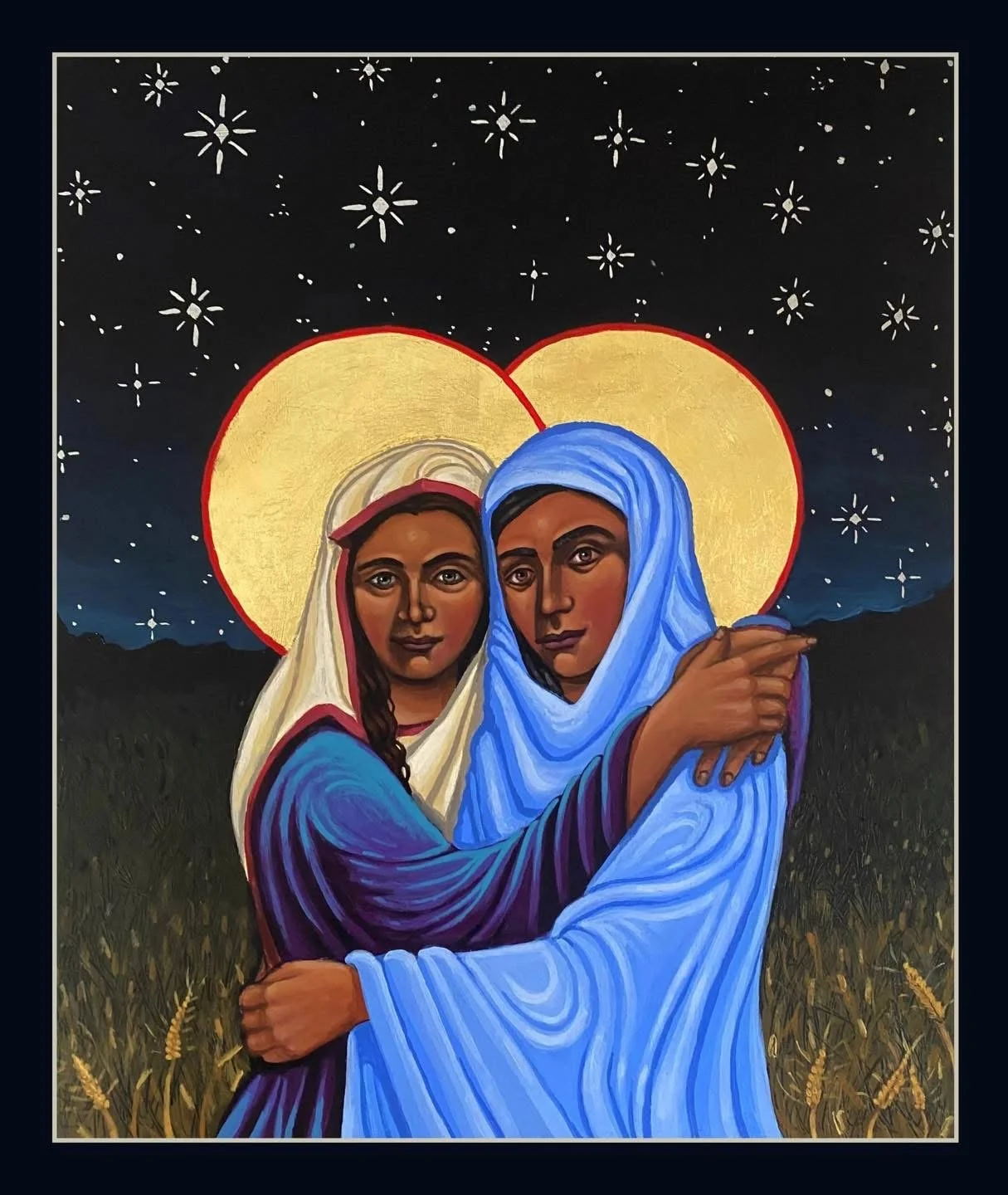
Ruth and Naomi
It’s not just David and Jonathan who are treated as ‘special’ friends in the Hebrew Bible, but two women as well.
Many now consider it the Bible’s best love story.
In the Book of Ruth, famine has struck the land, and two women are now widowed. Naomi tells her daughter-in-law to go home.
Ruth refuses.
And what she says is immortalized in Christian marriage ceremonies every day:
“Where you go, I will go.
Where you lodge, I will lodge.
Your people shall be my people,
and your God my God.
Where you die, I will die—
there will I be buried.”
(Ruth 1:16)
Spoken at heterosexual weddings as vows of lifelong union. The Bible places them in the mouth of one woman to another.
The Hebrew verb used is dāvaq — “to cling” — the same verb used in Genesis for a man “cleaving” to his wife or a soul clinging to a beloved 34:3
It’s an obvious, intentional parallel.
The narrative then centers their bond. Ruth lives with Naomi, providing for her financially. They struggle and strive together in a patriarchal world. When Ruth finally has a child, the townswomen proclaim:
“A son has been born to Naomi.”
(4:17)
The emotional arc belongs to the women. Boaz is a biological necessity; Naomi is narratively central.
Scholars see the queer reading. Ken Stone, Deryn Guest, and J. Cheryl Exum all argue that the text presents a covenantal same-sex bond using language otherwise reserved for marriage. It is affectively intense, economically intertwined, socially visible, and theologically sanctioned.
Nothing in the story rebukes it. Nothing distances the reader from it. Instead, Israel’s royal line is built on it. From Ruth and Naomi to David, the lineage in the Gospels is built on these queer foundations.
You could read it as just a platonic commitment between a younger woman and an older one. But the text treats it as exceptionally devotional and covenantal—as holy. So much so that countless couples have chosen to hear those words as the truest form of love: the very definition of what marriage means, gay or otherwise.
🏳️🌈🏺2-GAY IN HISTORY: BIBLE 6 🛐🏳️🌈
Non-binary is not a modern thing, it’s not a 1:1 comparison, but it’s in the Hebrew Bible
Yes, Deuteronomy excludes eunuchs from the assembly. That law reflects an ancient system obsessed with lineage, inheritance, and bodily conformity. Eunuchs are often treated as gender neutral, and non-reproductive in a world where value was measured by heirs, land and name continuity.
But in Isaiah 56 the prophet refutes that exclusion directly:
“Let not the eunuch say, ‘I am a dry tree.’
… To the eunuchs who keep my sabbaths…
I will give in my house and within my walls
a name better than sons and daughters;
an everlasting name that shall not be cut off.”
In a culture structured around reproduction, this is not a minor exception. Meaning is detached from biology. Belonging is elevated above conformity. Covenant is detached from genitalia.
Scholars widely recognize Isaiah 56 as a deliberate counterpoint to Deuteronomic restriction. The canon preserves the changing attitudes.
The eunuch — once barred — becomes the bearer of an “everlasting name.”
Before modern categories existed, Scripture made a place for people whose lives did not align with patriarchal norms and promised them permanence inside the covenant.
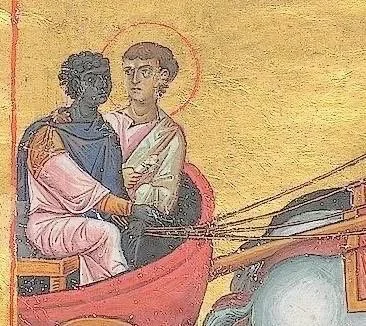
Centuries later in the Book of Acts, the Apostle Phillip, directed by an angel, meets an Ethiopian eunuch and reads to him this passage from Isaiah. The eunuch, used to exclusion based on his gender minority status, embraces Christianity and is baptized on the spot.
That promise remains in the text, a covenant with a community now maligned by “biblical christians.” Maybe it’s time they acted more like the prophets and the apostles.
🏳️🌈🏺 2-GAY IN HISTORY: Bible 7🛐🏳️🌈
Some of the best people, even in the Bible, are defined by difference.
Biblical law codes are famous for policing gender boundaries (Deut 22:5)—a verse plucked out of a laundry list to justify outlawing “cross dressing” and drag in the west until the civil rights era— it also banned (kĕlî geber) tools—or maybe methods—of the other gender. But the narrative tradition regularly presents figures whose heroics refute those gender stereotypes.
Joseph is introduced in a “coat of many colors,” flamboyant clothing that makes him stand out. The Hebrew phrase for Joseph’s garment (ketonet passim) appears elsewhere only in 2 Samuel 13:18 to describe the robes worn by royal virgin daughters.
Later Joseph himself is described as:
“beautiful in form and appearance.”
(Genesis 39:6)
A phrase otherwise used exclusively for women (and once for David, an oddity discussed in an earlier post). Joseph is aestheticized and desired, but in his story he refuses heterosexual advances at great personal consequence. He eventually succeeds not through conquest but through interpretation, emotional intelligence, and modes coded as feminine.
While the other patriarchs have prominent heterosexual love stories, Joseph’s wife is abruptly given to him by Pharaoh, barely mentioned, and present seemingly just to provide heirs.
Daniel likewise inhabits the Babylonian imperial court, and the Hebrew text places him there with pointed specificity. He is delivered directly into the household of Ashpenaz, the sar hasarisim — the chief of the eunuchs. The text does not state that Daniel was castrated, and we should not assume. But it situates him inside a courtly world severed from lineage and fertility, under the authority of a man defined by that severance.
The Hebrew text of Daniel 1:4 already describes the selected young men — Daniel among them — as tovei mar’eh, good-looking, of beautiful appearance. And in Daniel 1:9, God grants Daniel hesed before Ashpenaz — steadfast love, covenant loyalty, the language of intimate faithfulness. The chief eunuch is drawn to Daniel, and the text names it in the same register it uses for sacred bonds.
Daniel refuses the royal food, resists the imperial renaming meant to assimilate him, and thrives not through force but through interpretation and devotion. He rejects the expectations of masculine conquest from inside the most gender-transgressive household in the ancient Near East.
Neither narrative names sexuality. But both cast Joseph and Daniel in a softer, more technicolor light.
They are not alone. The Bible celebrates women who use the tools and methods usually reserved for men as well. Deborah judges Israel and commands its armies. Jael assassinates an enemy general and is praised in Israel’s victory song: “Most blessed of women be Jael.” (Judges 5:24). Older biblical law codes try to police gender, yet the narrative tradition repeatedly lauds heroes who cross those boundaries and thrive.
Joseph and Daniel stand as men whose beauty isn’t shied away from, whose nonconformity is prevalent, and whose difference becomes their strength. For all the talk of “warrior masculinity” in modern Christian men’s groups, the Bible itself shows there are many ways to be a “man”.
🏳️🌈🏺 2-GAY IN HISTORY: Bible 8🛐🏳️🌈
Love your neighbor, forgiveness, nonviolence, mama’s boy, anointed with perfume, long hair, hanging out with all guys, letting one cuddle with him at the dinner table, no wife… does Jesus sound kinda gay, bro?
Jokes aside:
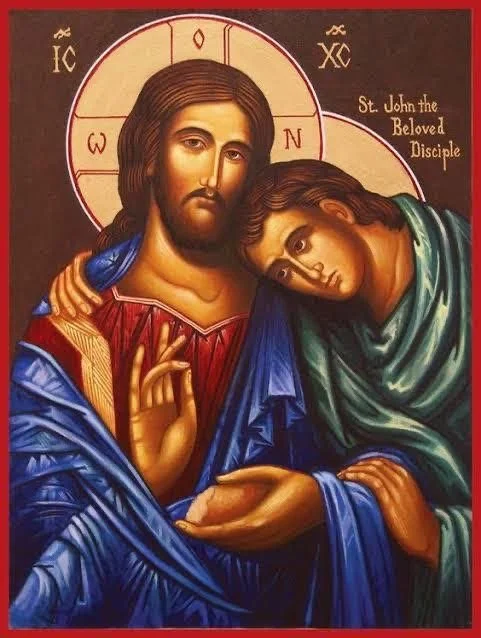
The Gospel of John contains a very special, somewhat queer character who appears the most intimate with Jesus, but is never named, and is described only by his relationship to Jesus. He is ‘ho mathetes hon egapa ho Iesous’— the disciple whom Jesus loved, not just loved Jesus.
He appears at the Last Supper reclining against Jesus(John 13:23). The Greek word is ‘kolpos’ — bosom, chest, the space between. John uses the same word in the gospel’s prologue to describe the Son’s relationship to the Father: the only begotten who is ‘eis ton kolpon’ of God. The Beloved Disciple’s physical intimacy with Jesus is uniquely framed in the same register as divine intimacy.
When Peter wants to know who will betray Jesus, he doesn’t ask Jesus himself. He asks the Beloved Disciple to ask, because the Beloved Disciple is close enough, trusted enough. He is the mediator of Peter’s concern at the most consequential moment in Christian history.
Then at the crucifixion all the male disciples have fled but not the Beloved Disciple. Jesus looks down from the cross and speaks to him and to his mother in the same breath, binding them to each other: “Woman, behold your son. Behold your mother.” (John 19:26-27). Queer readings have often seen this as a very unorthodox marriage. Jesus makes him family in his final words, entrusting his mother to the person he loves. Making him family, and Mary his mother in love if not in law.
The queerness continues Easter morning when Mary Magdalene runs to tell Peter and the Beloved Disciple that the tomb is empty. They race to the tomb. The Beloved Disciple outruns Peter and arrives first — but stops at the entrance. Peter goes in. Then the Beloved Disciple enters, sees, and the text says simply: “he believed.” (John 20:8). Not Peter; the one who loved Jesus is the first to understand the resurrection.
The tradition has worked hard to give him a name. He is usually identified as John son of Zebedee, since he is missing from John’s Gospel while named in others. Some early traditions suggested Lazarus — the only other man the gospel explicitly says Jesus loved (efilei, John 11:3 our next topic). Some modern scholars suggest the anonymity is deliberate, a 2,000 year mystery or invitation.
What the text does not obscure is the relationship itself. The Beloved Disciple is present where the other disciples are absent. He is physically intimate with Jesus in public, at table, in a way the text presents without equivocation. Jesus’s last earthly act of love, of care, is directed at him. He is the one who believes first.
The gospel does not name what this is, but this loving intimacy was seen as too important—too beautiful—to be scrubbed out by the early church… so why are we letting the modern church?
🏳️🌈🏺 2-GAY IN HISTORY: Bible 9🛐🏳️🌈
In 1946 a committee of translators working on the modern English revision of the Bible made a decision that would shape American Christianity for generations. They added the word “homosexuals” for the Greek word arsenokoitai. The translators themselves were not certain what it meant, as depicted in the documentary 1946.
The word appears exactly twice in the New Testament — 1 Corinthians 6:9 and 1 Timothy 1:10. It is seemingly coined by Paul and apparently unprecedented in Greek literature before him. You cannot claim certainty about a word whose usage history is nonexistent before the man who may have invented it.
The word is a compound of arsen (male) and koitē (bed). The traditional argument is that the parts tell you everything you need to know. But in Greek, like English, compounds don’t work by simple addition, under-stand? The parts of a word don’t always equal its meaning.
The earliest appearances of the word after Paul, almost 100 years later, appear consistently alongside economic sins, exploitation, and coercion rather than in lists of sexual sins. Even in 1 Timothy 1:10 it sits directly next to andrapodistais — kidnappers and slave traders.
Theologian John Boswell argued the word probably referred to male prostitution or those who exploit them, while Dale Martin argued for an even broader category of economic sexual exploitation. Robin Scroggs claimed it referred specifically to pederasty — adult men exploiting boys — which had largely fallen out of favor by then and was being attacked by pagan writers as well.
The steel man argument is this: the words arsen and koitē appear together in the Septuagint — the Greek Old Testament — in Leviticus, in the Holiness Code prohibitions. Paul may have deliberately created arsenokoitai referencing that text. But even if accepted, it doesn’t settle the question.
The Holiness Code was concerned with ritual purity and Israelite distinctiveness, as discussed earlier, not with universal sexual ethics, and the prohibitions themselves are embedded in a system Paul rejects.
Even in both Corinthians and Timothy it is in the middle of “sin lists” that include the greedy, liars, and adulterers — read: any extra-marital sex.
What is not in dispute is that Paul was not condemning an identity that he had no concept for, as the Roman world had no term for being gay (though they had plenty for the acts that Paul could have used) and it was only understood as an identity in the last couple of centuries.
The act, much less the identity, should thus be no more condemned by Christians than greed or adultery.
Corinth was dedicated to Aphrodite, just as Athens was to Athena, and reportedly employed temple prostitutes—both male and female—to celebrate the goddess with, for a small donation of course. It’s even about that city that our word porn was first coined.
Sitting right before ‘arsenokoitai’ in 1 Corinthians 6:9 is ‘malakoi’ — often translated “effeminate” or “temple prostitutes” or, in modern versions, collapsed into “homosexual” alongside arsenokoitai.
‘Malakos’ literally means soft. The only other times it appears in the New Testament are in Matthew and Luke — where Jesus uses it to describe fine clothing. No sexual meaning at all.
Scholar Dale Martin argues the word describes moral weakness and self-indulgence broadly — someone who lets desire override self-control. In the ancient world that could mean a ‘weak’ or ‘effeminate’ man or any persuasion. Translating it as “homosexual” requires importing a modern context they didn’t have.
The two words are not synonymous, and ‘malakoi’ means something closer to weak willed in this context.
Then we must consider the context from which it comes. First Corinthians chapter six opens with Paul rebuking the community for taking their issues to court, saying that the community should care for their own, and not be overly judgmental. Certainly not a sentiment in line with political campaigns against gay marriage or LGBTQ rights.
Directly after the vice list, including arsenokoitai, it says: “and such were some of you, but you were washed, you were sanctified, you were justified in the name of the Lord Jesus.” The list exists to say you have been accepted. Not here are the people to exclude.
Paul’s pastoral letter urging Christians toward mercy has instead become the primary instrument of condemnation against people it was never written to address.
Translators in 1946 put a word in the Bible that couldn’t have been conceived at the time. They weren’t sure what they were doing and admitted as much.
We’ve been paying for that ambiguity ever since. Don’t let one word make you miss the message of the whole.
🏳️🌈🏺 2-GAY IN HISTORY: Bible 10🛐🏳️🌈
At Easter Christians celebrate the resurrection, but it wasn’t the first resurrection in the gospels — and there is something secret about Lazarus.
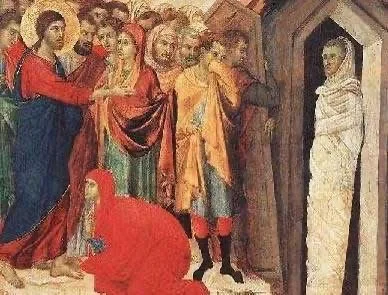
In John 11, Jesus receives a message: “Lord, the ONE YOU LOVE is sick.” The Greek word is ‘phileis’ — intimate, personal love. Not the selfless divine love, ‘agape’. But deep love for a specific person.
Jesus eventually travels to Bethany but finds Lazarus already four days in the tomb. He sees Mary and Martha weeping. He sees the crowd’s sadness. And then in the shortest verse in the Bible: “Jesus wept.” The crowd’s response is immediate: “See how he loved him” — Greek word ‘ephilei’, same root. The love is public and unguarded. In uniquely John fashion, the text presents none of it with anxiety.
Lazarus is the only other figure in the Gospel described with the same language used for the Beloved Disciple. Some scholars have argued they may be the same person, though that is contested and discussed in our earlier entry. What matters here is what the text makes plain: this is the person Jesus loved most visibly, grieved most publicly, and raised from the dead.
The raising of Lazarus appears only in John, but there is another version of this story — or something very close to it, even set in Bethany, just not naming Lazurus — that may never have been cut from the Bible. In a letter attributed to Clement of Alexandria writing decades before the gospels were standardized, and written to defend the text against a Gnostic sect already reading it sexually, it confirms the passage existed but was kept strictly guarded. Clement explicitly denies a sexual interpretation, but the fact that he has to deny it tells us that a sexual reading of this passage is not a modern imposition. It is as old as the text itself, and the early church was anxious about it.
The letter was found in the 1950s by biblical scholar Morton Smith at a monastery in the Judean desert, quoting a passage from a longer version of Mark — a version it calls the Secret Gospel of Mark. The passage describes Jesus arriving at a tomb, rolling away a stone, and raising a young man — Greek word ‘neaniskos’ — who had died, much the same as Lazarus, but with a very different scene after.
The raised young man looks at Jesus and “looking upon him, loved him and began to beseech him that he might be with him.” He then comes to Jesus late at night, wearing only a linen cloth — Greek word ‘sindon’ — over his naked body, something the text makes special note of. And then he spends all night with Jesus, being taught “the mystery of the kingdom of God.” I wonder why the ancient gnostics thought this sounded sexual?
The scene echoes something even earlier in the Bible. In 2 Kings 4, Elisha raises the Shunammite woman’s son by lying directly on top of him — mouth to mouth, eyes to eyes, hands to hands. Physical contact, intimacy, and resurrection are already threaded together in the tradition Secret Mark is drawing on.
But the most compelling evidence to its veracity is in canonical Mark itself.
At Gethsemane, in Mark 14:51-52, a young man — ‘neaniskos’ again, the same specific word — follows Jesus wearing only a linen cloth, ‘sindon’, again, and flees naked when the soldiers seize him. He has no name, no seeming purpose, no explanation. He appears nowhere else in Mark. Scholars have puzzled over him for centuries because he makes no narrative sense unless he is a remnant of something earlier that was cut.
Harvard scholar Helmut Koester argues just that — that both derive from a common source, with canonical Mark being a later edited version that removed the Secret Mark episode but inadvertently left this orphaned naked figure behind.
There is a minority of serious scholars who believe the excerpt from Secret Mark may be a forgery. But Koester’s textual argument rests on internal literary evidence, and would explain why Lazarus’s resurrection was not echoed in Mark and the lost reference to the ‘neaniskos’.
The early church fathers, like Clement, decided what went into the Bible and what got left out, and they are known to have edited Mark’s gospel before, most notably by adding a different ending to it. It seems possible that the Bible was edited again to remove these ambiguous lines of intimacy and love between men—even nearly naked ones.
🏳️🌈🏺2-Gay in History: Bible 11🛐🏳️🌈
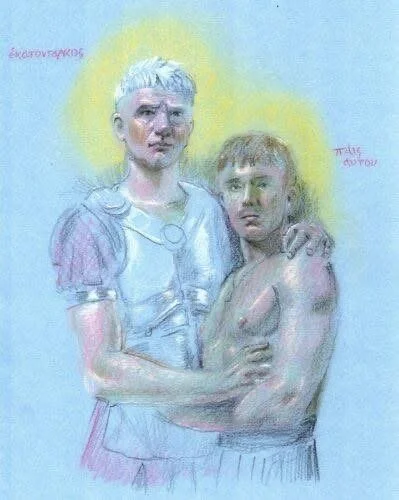
Remember that time Jesus healed a gay man’s lover? Really? It’s told in both Luke 7 and Matthew 8:5
Jesus enters Capernaum and is approached by a centurion, an officer in the Roman Legion, whose ‘pais’ is gravely ill. The centurion’s ‘pais’ is ‘entimos’ to him — beloved, adored, valued. Jesus offers to come heal him, but the centurion counters:
“Lord, I am not worthy to have you come under my roof — but only speak the word and my ‘pais’ will be healed. For I too am a man under authority, with soldiers under me. I say to one, ‘Go,’ and he goes, and to another, ‘Come,’ and he comes, and to my ‘doulos’ — my slave — ‘Do this,’ and he does it.”
Jesus marvels at the centurion’s faith, says the word, and heals the ‘pais’.
You probably remember this story as a healing of a slave. But it wouldn’t have read that way to a Greek or Roman listener. When the centurion demonstrates his authority, he uses ‘doulos’ — slave — for his other servants. But for the sick person, both tellings are careful: the narration introduces him as a ‘doulos,’ but the centurion himself always calls him ‘pais.’
‘Pais’ has several meanings: first, boy or child; second, servant or slave. But just as “boy” or “partner” carries different weight depending on context in the gay community today, so did ‘pais’ then. In secular military contexts it is sometimes translated as “tentboy” to distinguish it — the younger companion, servant, and often sexual partner of an officer.
By this point Judea had been shaped by Greek culture for centuries and Roman culture for generations. Rome assigned sexual roles by rank and status. A servant was a socially acceptable receptive partner, especially for an officer. Soldiers were prohibited from legal marriage during service, and many officers were permitted, even expected, to have a younger soldier or servant as a sexual companion and tentmate. The word for that person was usually ‘pais,’ borrowed from the Greek term for the younger partner in a traditional—conceptually coercive—mentor relationship, called pederasty.
Every Greek speaker in the audience would know those resonances. Even Jesus, raised near a Greek city and formed within a culture long shaped by Hellenic influence, would know the difference between ‘pais’ and ‘doulos.’
And then a centurion, risking his status and reputation by coming to a Jewish healer rather than to Roman shrines—possibly why he’s not eager to have Jesus at his house — that risk is itself a measure of how deeply he ‘entimos’ this ‘pais.’ Scholars Theodore Jennings and Tat-siong Benny Liew recognize this distinction and argue it is deliberate.
Jesus compliments the man as having more faith than all in Israel, and heals the ‘pais’ without hesitation or qualification. He doesn’t admonish him, ask for clarification or repentance, but compliments and gives immediate aid. Maybe Jesus never spoke explicitly about gay people in his ministry — but he ministered freely to them and praised their faith without condition.
Could the centurion have simply adored his totally platonic slave? Used a deliberate special term of endearment, while he implied other slaves with whom he didn’t share some special bond? Could he have risked his standing, even if he wasn’t Roman, for purely professional or compassionate reasons? Sure, it is a completely valid, if potentially tone deaf, reading of the text but it ignores the intentionally shifting words and their subtextual connotations.
It’s like someone in a gay bar mentioning their “partner at home” — it could mean a business partner they happen to live with. But, that’s not what anyone would assume. And that blaring implication is exactly what millions of Bibles have chosen to translate into the closet.
🏳️🌈🏺2-Gay in History: Bible 12🏺🏳️🌈
If you grew up in a church, you know this one. Romans 1 is the passage most deployed against queer people in the New Testament, and unlike Leviticus — which most Christians quietly set aside along with the rest of the Holiness Code — this one comes from Paul, in the New Testament, and it hurts. Can’t sugar coat this one, but sugar can cover bitter medicine.
So let’s start with what the passage is actually doing.
Romans is a letter Paul is writing to a specific congregation in Rome — a mixed community of Jewish and Gentile Christians with a lot of tension between them. Right off the bat Paul opens by beating up on the Gentile, who abandoned God for idols and were thus “given up” by God to disordered passions like same-sex acts — but also things like being boastful, ruthless, or a gossip. The Jews in the community would have finished the first chapter smiling and nodding.
But then comes the sucker punch, Romans 2:1: “Therefore you have no excuse, O man, every one of you who judges. For in passing judgment on another you condemn yourself, because you, the judge, practice the very same things.”
This is the bitter medicine hidden in the letter. The supposedly holy ones are condemned for judging while being no better than the Gentiles — a deliberate rhetorical setup designed to catch self-righteous people in the act of condemning others. Paul gets his audience gloating at the sins of pagans, then turns the entire argument back on them. Paul uses homosexuality because it was so visible in Greco-Roman culture but condemned in Jewish thought, but then goes on to list numerous other sins, so long everyone feels called out.
Even the most conservative scholars acknowledge this is what Paul is architecturally doing. The passage most used to condemn queer people was written to condemn exactly the kind of person using it that way. That’s why you should always read the whole chapter before and after the verse.
Romans is indicting the accuser and giving them a bitter pill to swallow.
But there is more.
Paul is not describing same-sex acts as the sin — but as the consequence. The structure of the passage is: Gentiles abandoned God → God gave them up → disordered passions followed. Same-sex acts appear as a symptom of idolatry, not as their own subject of condemnation. Paul is telling a morality tale about what happened to a specific people in a specific context — not necessarily legislating for Christian relationships across all time.
Professor Dale Martin makes the crucial point: Paul is not giving an account of homosexual desire as such. He is describing Gentile idolaters.
The key phrase is ‘para phusin’ — usually translated “against nature.” It sounds categorical. But three chapters later, in Romans 11:24, Paul uses the exact same phrase to describe God grafting Gentiles into Israel — something Paul presents not as an abomination but as a miracle of grace. “Against nature” doesn’t mean eternally and absolutely forbidden. It means something more like “not the usual way of things” or “outside the expected order.” The ancient mind was far more concerned with excess and lack of self-control — and that seems to be what this passage is actually about.
A note on ‘malakoi’, the other word in this family of passages — see our earlier post on arsenokoitai, where we addressed it directly. The same problem applies: a word translated into a category it was never meant to carry.
But let’s be honest: Romans 1 is still the strongest biblical case against us. It is Paul. It is the New Testament. It mentions women as well as men. Even some queer-affirming scholars argue Paul knew about same-sex relationships beyond exploitative contexts and condemned them anyway. More on that in the comments.
But here is what does not require a footnote or debate: Paul wrote this passage as an intentional trap. He wrote it to stop people from using exactly this kind of catalog of sins to condemn others while exempting themselves — and the sin list is long, with same-sex acts as just one among many.
And then he followed it immediately with some of the most expansive language of grace and inclusion in all his letters.
Romans was not written to give anyone a weapon. It was written to make weapons backfire.
If this passage has been used against you, you were not the one Paul was condemning. Romans 2 is the best response to Romans 1.
🏳️🌈🏺2-Gay in History:Bible 13🛐🏳️🌈
Paul says that women shouldn’t teach, but that’s not what Paul said.
In his own letter to Rome — the same letter containing Romans 1 — Paul closes with greetings to Phoebe, whom he calls a deacon; Priscilla, his fellow worker in ministry; and Junia, whom he names “prominent among the apostles.”
But you’ve been told Junias was a man? No, Junia was a common Roman woman’s name. There is no record anywhere in ancient literature of a male name “Junias.” It never existed until around the 12th or 13th century, when scribes began quietly changing her name in the manuscript tradition to an invented male form, as scholar Bernadette Brooten says: “Because a woman could not have been an apostle, the woman who is here called apostle could not have been a woman.”
Eldon Epp traced the manuscript trail and confirmed it — a woman honored as an apostle for over a thousand years had simply been renamed, a lie that wasn’t exposed until a few decades ago.
Mary Magdalene is present at the crucifixion when the male disciples have fled. She is first to the tomb in all the gospels. She is the one Jesus calls by name on Easter morning and sends to tell the others. The Eastern church has always called her “apostle to the apostles.” Her importance is not ambiguous— over and over again she is named.
But the lie you’ve been told has a birthday: on September 14, 591 CE, Pope Gregory “the Great” gave Homily 33 and merged three distinct women into one: Mary Magdalene, Mary of Bethany, and the unnamed sinner of Luke 7. He suggested the oil she used on Jesus was her perfume and that the seven demons cast out of her were the seven deadly sins, lust especially. And in one sermon, the first witness to the resurrection became a repentant sex worker. The Catholic Church finally quietly corrected this lie in 1969 and Pope Francis elevated her feast day to equal standing with the male apostles, just 1500 years late.
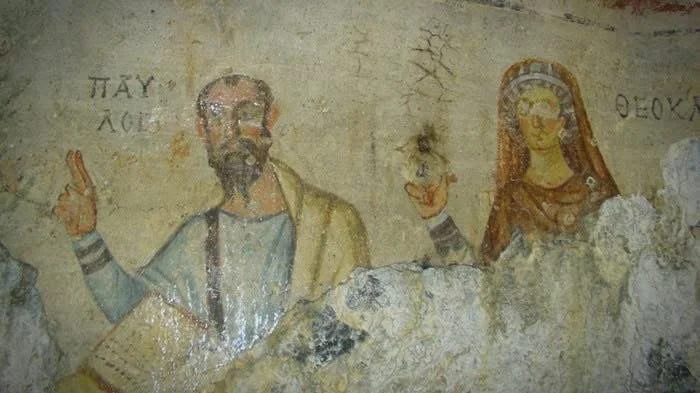
Then there is Thecla, the most popular female saint after Mary in the early church, called “apostle and equal to the apostles” in the Eastern tradition. Her story was wildly well read in Greek, Latin, Coptic, Syriac, and Armenian. Eventually so impressed by her faith, Paul commissions her to go and teach the gospel. She survived two executions, baptized herself, and spent decades healing and preaching. Women across the early church used her story as inspiration to teach and baptize.
Then around 200 CE the “church father” Tertullian rages against the text by name, citing Timothy — “let them keep silence and ask their husbands at home” — to argue no woman could minister. But he was using a letter widely considered written after Paul’s death, borrowing Paul’s name, to suppress a story about Paul commissioning a female apostle in a very well known text.
The other verse he uses is much like the first: 1 Corinthians 14:34 interrupts Paul mid-argument and contradicts what he says earlier in that same letter. It also appears in different lines in different manuscripts, if at all — a pretty strong sign of later copy/paste directly from Timothy. Neither that verse from Corinthians nor Timothy appears in the most ancient collection of Paul’s letters that we have (P46), while the Acts of Paul and Thecla circulated widely a century before any of those verses appear. The church used almost definitely forged letters to overwrite Paul’s actual life and ministry.
In 1983 Elisabeth Schüssler Fiorenza published In Memory of Her — its title taken from Jesus’s own words about the woman who anoints him: “wherever the gospel is preached, what she has done will be told in memory of her.” She reconstructed what the early church actually looked like before imperial patriarchal structures displaced women from leadership, arguing the Jesus movement began as a discipleship of equals. The evidence was always in the text, hiding under the lies we were told.
The tools used against women are all too familiar: manuscript alteration, canonical exclusion, disputed verses cited as settled law, distinct figures collapsed into a convenient stereotype, inconvenient texts suppressed. People renamed, shamed, or silenced. Each time the church deciding that what the text said could not mean what it said, because the people it honored challenged prejudices.
When Christianity moved from a radical people’s movement to the imperially sanctioned church of empire, the cost of respectability was paid by everyone on the margins of the fiercely paternalistic Roman world.
But in the last half century scholars and feminists have done amazing work starting to uncover and restore these women of the Bible. The recovery work for queer people is even newer and just beginning. Both projects are the same: reading the whole verses, what’s actually there, then refusing the lies and forced interpretations layered over it, and insisting the Bible is big enough to hold the people who have always been there.
🏳️🌈🏺2-Gay in History🛐🏳️⚧️
Jesus never said anything about gay people. We’ve heard that — and it’s technically true. But he did welcome people who fall outside the male/female binary.
Matthew 19 opens with the Pharisees testing Jesus on divorce. He gives a stricter answer than they expected, one most modern Christians seem to gloss over. His disciples respond: if that’s the standard, it’s better not to marry at all and Jesus doesn’t correct them.
“Not everyone can accept this teaching, but only those to whom it is given. For there are eunuchs who have been so from birth, and there are eunuchs who have been made eunuchs by others, and there are eunuchs who have made themselves eunuchs for the sake of the kingdom of heaven. Let anyone accept this who can.”
Three categories of people: the third — voluntary celibacy for the kingdom — is the one churches focus on exclusively ignoring the first two.
Jewish tradition has long recognized multiple gender categories. The Talmud distinguishes between the ‘saris hamah’ — a person born with male-identified characteristics who naturally develops otherwise — and the ‘saris adam,’ eunuchs made so by human intervention. Those categories map exactly onto Jesus’s list, we may not practice castration any more, but Jesus is describing intersex people and people who have had their gender changed, without excluding either.
It gets more complicated though. In the ancient world “born eunuch” often described men who lacked attraction to women not just genitalia— a category that included what we would now call some gay men. Even Robert Gagnon — the most prominent conservative anti-gay biblical scholar — concedes that born eunuchs in the ancient world probably included homosexually inclined people, which he acknowledges contradicts the claim that the ancient world couldn’t conceive of people born with same-sex attraction.
Jesus casually includes them without calling them to repentance or qualifying or conditioning their place in the kingdom. He simply acknowledges they exist and moves right along.
Jesus seems to be aware that not everyone could accept these people and yet he seems to include all non-binary and trans people, and even by extension gay people using the only language he had for it before holding up celibacy, but the only thing the church heard was celibacy.
We covered earlier in this series how Isaiah 56 promised eunuchs — those barred from the assembly in Deuteronomy — an everlasting name better than sons and daughters. And how in Acts, Philip finds the Ethiopian eunuch reading that very prophet and baptizes him on the spot. Jesus’s words in Matthew are just part of that same thread.
“Let anyone accept this who can.”
Jesus doesn’t ask you to be comfortable. He asks for acceptance. The people who can’t seem to manage that aren’t following a harder teaching than Jesus gave — they’re refusing the one he did.
I will share some closing thoughts on the series next week.
🏳️🌈🏺 2-Gay in History: Bible 15🛐🏳️🌈
This is the closing post of our Bible series —
The Bible is more than you’ve been told, and certainly more than you’ve ever been quoted from a pulpit. Just read the Song of Solomon — the most erotic book in scripture — and watch how the church tied itself in knots trying to spiritualize and suppress it, because inconvenient texts have always made institutions nervous. That instinct to control the text is the same one this series has been tracing all along.
This kind of queer exploration was something John Boswell famously began decades ago in Christianity, Social Tolerance, and Homosexuality, and the scholars who followed him have built a substantial body of work. We’ve drawn on a lot of it here. But we want to be honest: not every argument in this series carries equal weight. The authorship of the Secret Gospel of Mark is genuinely contested. David and Jonathan being more than brothers is suggested by the language but never named by the text. Some readings are mere possibilities. Others — the pais/doulos distinction, the rhetorical trap of Romans 1, the manuscript evidence behind the silencing of women, the interpretation of Sodom as violence to strangers— are confirmed by the text itself, and the scholarship is solid.
Then there is all the hypocrisy of ignored passages on polygamy, divorce, dietary restrictions, and slavery, while homosexuality alone is held up.
We’re not asking you to take any of this as gospel. We’re asking you to sit with the reasonable doubt. Because the burden of proof was never ours. It belonged to the institution that wanted to exclude us from the love of God that Jesus preached — and reading the whole text, it turns out they didn’t have nearly as strong a case as they pretended.
What we can say with confidence is this: queer people are in the Bible: not as cautionary tales, and not just in the margins. In the covenant with Naomi. In the grief of David. In the faith of the centurion. In the intimacy of the Beloved Disciple. In the promise Isaiah made to the eunuchs, fulfilled in Acts on a desert road. In the very words Jesus chose when he described people who fall outside the binary and said simply: let anyone accept this who can.
The institution spent centuries deciding that what the text said could not mean what it said — because the people it honored could not be holy. Feminist scholars started dismantling that project fifty years ago. Queer scholars have begun doing the same work ever since. Both projects are the same: reading the whole verses, refusing the interpretations and lies layered over them, and insisting the Bible is large enough to hold the people it always contained.
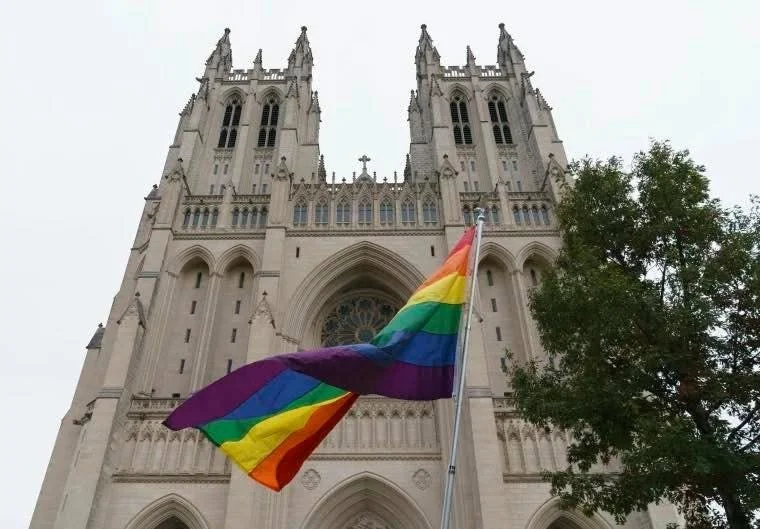
That work is now showing up in pews and pulpits. The United Church of Christ has ordained LGBTQ pastors since the 70s. In 2003 the Episcopal Church, ordained an out partnered bishop; and along with the Lutherans (ELCA) and the Presbyterian Church USA, all mainline denominations are now fully affirming, even allowing same-sex marriages to be performed. Just in May 2024, the United Methodist Church — the second largest Protestant denomination in America — voted with 93% approval to lift its ban on LGBTQ ordination and called sexuality “a sacred gift.”
Christianity is not a monolith. There are communities where you are not just tolerated but celebrated. Where your love is not a problem to be managed but a gift to be blessed. Where a place at the table is waiting for you.
And if institutional faith isn’t for you — for one reason or another — know this: you were always in the story. Before the translations. Before the councils. Before the sermons and the rulebooks and the schisms. The Bible reflects and has space for the full flawed human spectrum.
You were always there. The text records it.
🏳️🌈⛪ If you’re looking for a faith community that celebrates you —
If you were raised Catholic → try Episcopal. Same liturgy, same sacraments, same smells and bells. All the saints and sciences are welcome, even doubters and agnostics. It’s the best— radically inclusive—but I’m 💯 biased.
If you were raised Methodist → the United Methodist Church is now fully affirming as of 2025. Your church may already be home.
If you were raised Southern Baptist → try American Baptist Churches USA. Same tradition, same Bible, look for Welcoming and Affirming congregations.
If you were raised Presbyterian (PCA) → try Presbyterian Church USA. Same tradition, look for More Light congregations.
If you were raised Lutheran (LCMS or WELS) → try the ELCA. Same liturgy, same theology, look for Reconciling in Christ congregations.
If you were raised in the Church of Christ → try Disciples of Christ. Same Restoration Movement roots, fully affirming since 2013.
If you were raised non-denominational or evangelical → try United Church of Christ. Scripture-focused, low church, and the first mainline denomination to ordain an openly gay minister — back in 1972.
If you were raised Pentecostal → try Metropolitan Community Church. Founded in 1968 by a Pentecostal preacher named Troy Perry who was told God couldn’t love him. He disagreed. The worship will feel familiar.
Some queer Christians stayed in the pews of churches that didn’t want them and fought for decades to change them from the inside. All the denominations that are now inclusive are because of them.
DignityUSA has been organizing LGBTQ Catholics since 1969 — fighting for reform in a church that still won’t budge, because they believe their faith is worth the fight, they have made inroads and even met with Pope Francis along with New Wave Ministries
Integrity USA was founded in 1974 in rural Georgia by Dr. Louie Crew — an openly gay Episcopalian who helped build the grassroots movement that eventually led to Gene Robinson’s consecration in 2003 and full marriage equality in the Episcopal Church.
Reconciling Ministries Network spent over forty years mobilizing United Methodists for full inclusion, now to see the ban fall in 2024 with 93% approval.
More Light Presbyterians did the same slow patient work inside the Presbyterian Church USA and succeeded as well
These people had remarkable strength. They stayed and argued and prayed and were tried in church courts, refused communion, and yet kept showing up. The denominations that are now affirming didn’t get there by accident — they got there because of the slow work of people refused to be pushed out of the faith they loved.
Both paths are blessed if they lead to love and wholeness. Find community — whether that means leaving, staying and fighting, or building something new like Troy Perry did in his living room in 1968.